Smart Workout Diary
Dumbbell Decline Press Stability Ball
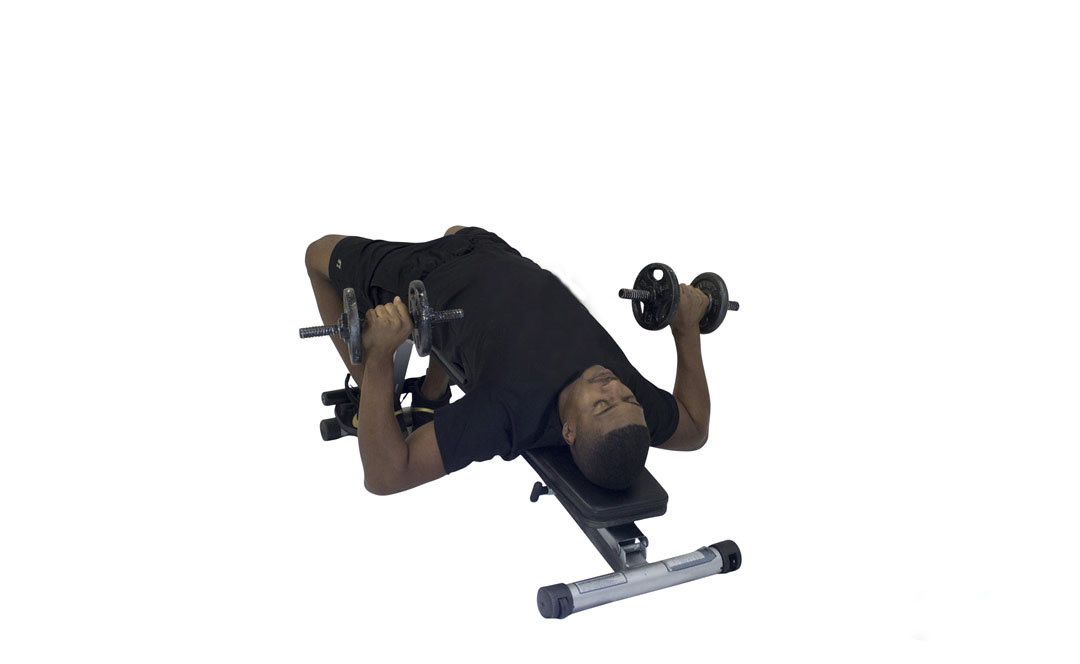
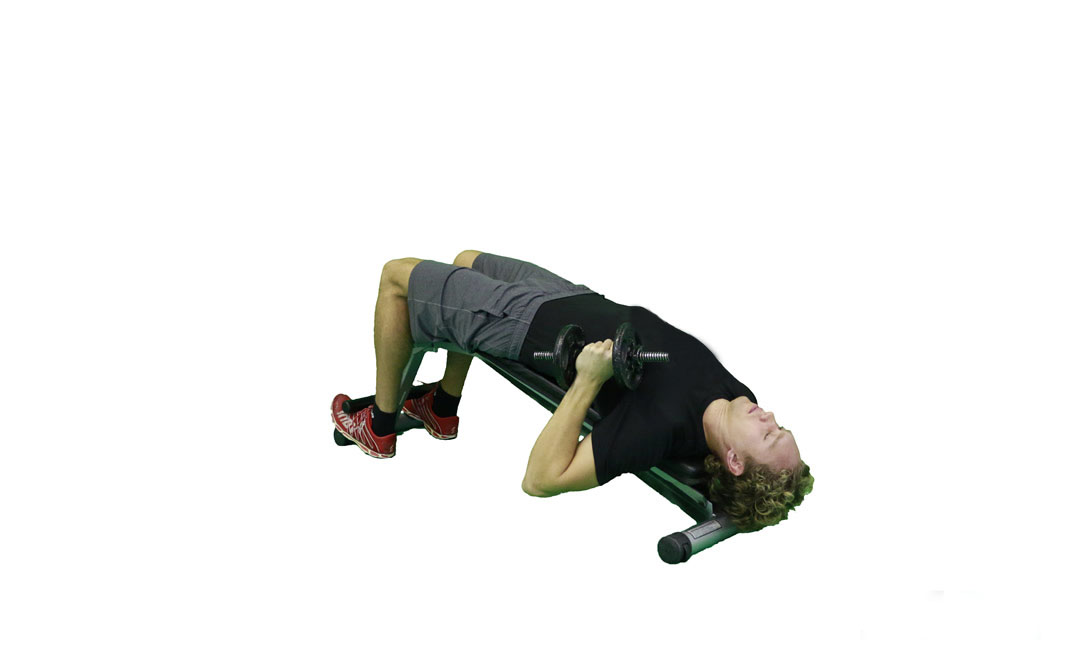
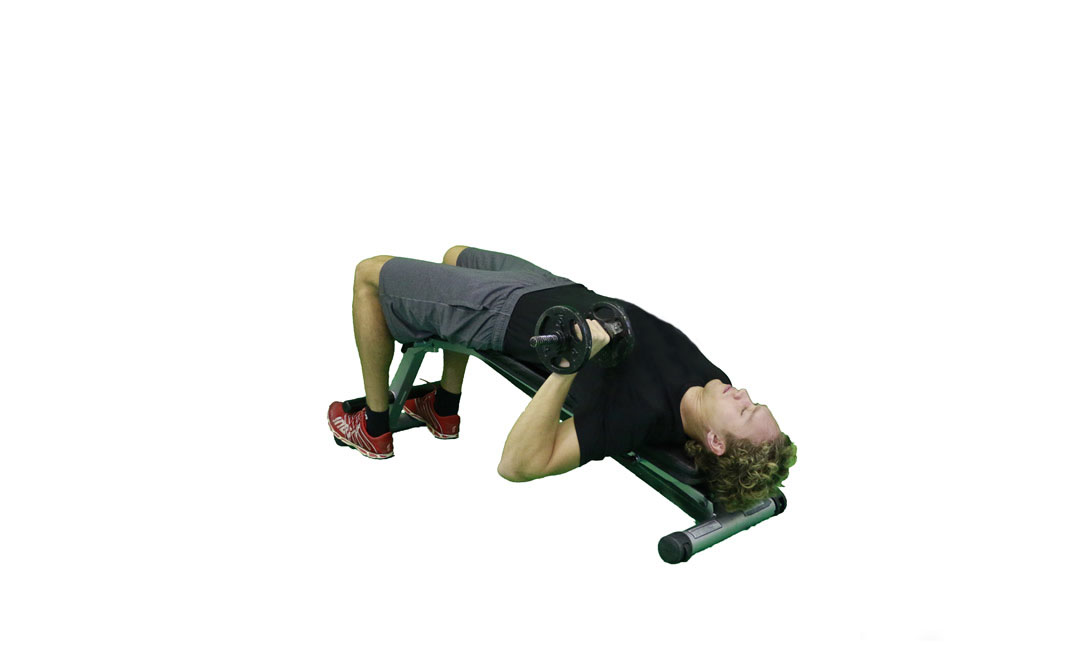
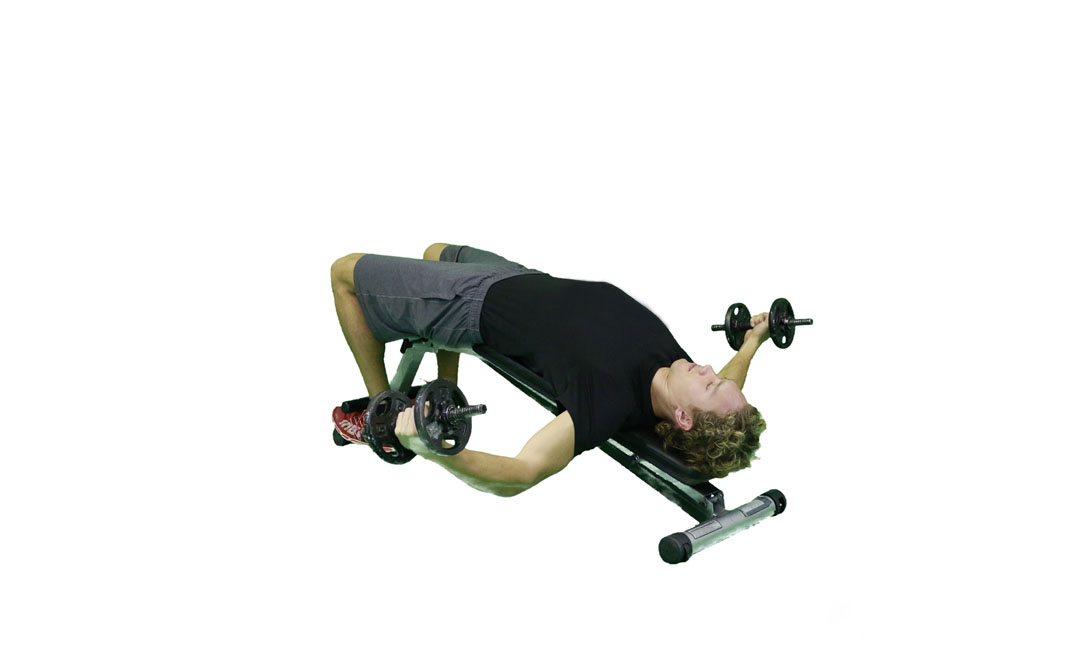
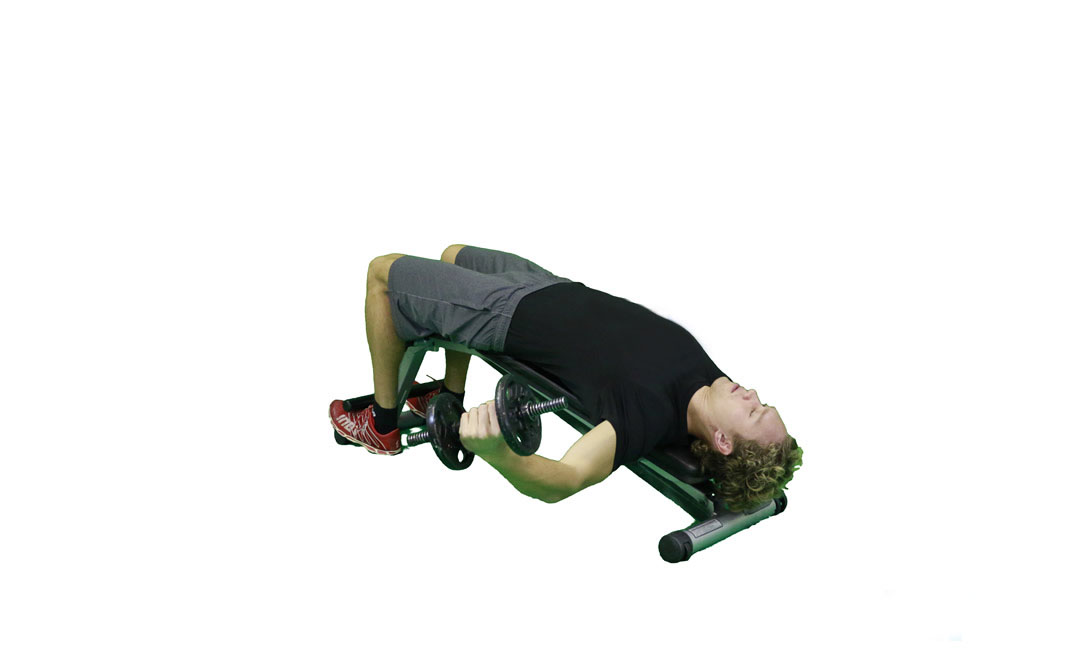
The dumbbell decline press on a stability ball is a chest press performed with the upper back supported on a ball and the hips lowered to create a decline angle. It primarily trains the lower portion of the chest, with the triceps and front shoulders assisting. The unstable support also requires controlled trunk and hip stability while building pressing strength.
Demonstration
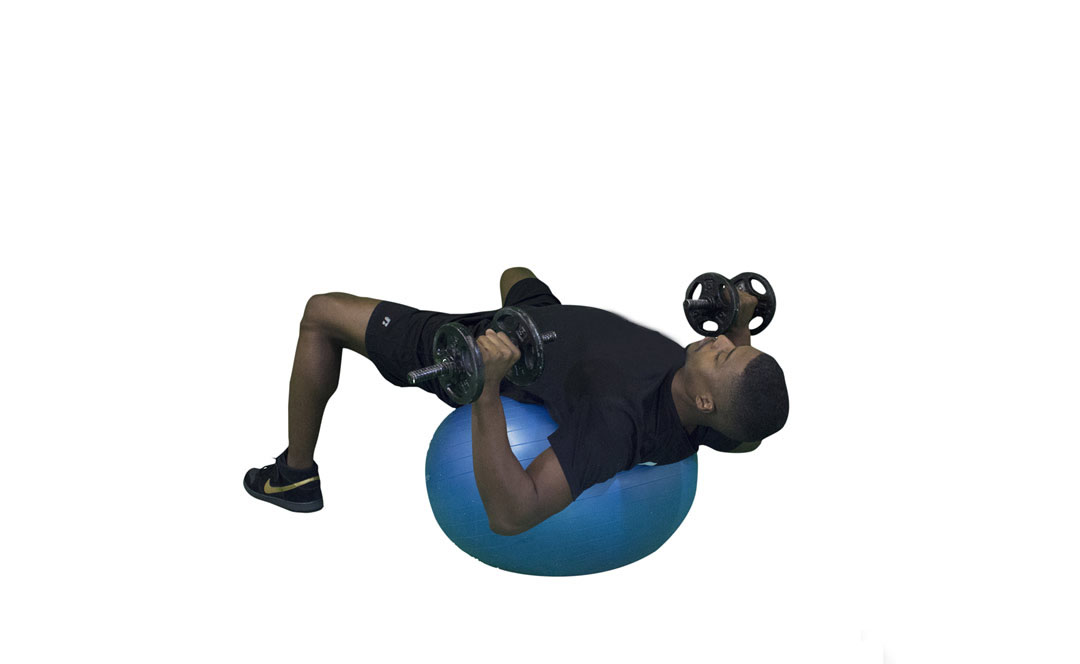
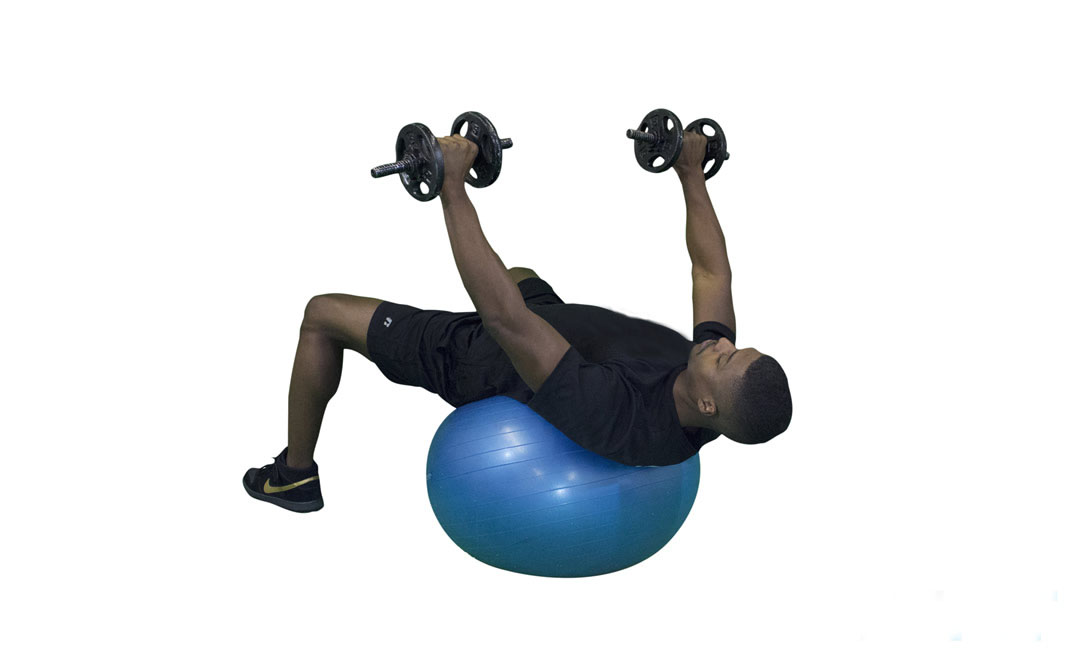
Instructions
- Set up safely: Hold light dumbbells close to your chest and sit in front of a properly inflated stability ball. Walk your feet forward until the ball supports your upper back and shoulders.
- Create the decline position: Place your feet firmly about hip-width apart, lower your hips below shoulder level, and keep your body stable. Brace your abdomen and squeeze your glutes.
- Start the press: Hold the dumbbells beside the lower chest with palms facing forward or slightly inward. Keep your wrists straight and elbows angled roughly 30–60 degrees from your torso.
- Press upward: Exhale as you press the dumbbells upward until your arms are nearly straight above the lower chest. Keep the ball and hips from shifting, and do not forcefully lock the elbows.
- Lower with control: Inhale and slowly lower the dumbbells back to the starting position until you feel a comfortable chest stretch. Keep your shoulders supported and stop if you lose balance or control.
- Finish carefully: Bring the dumbbells back toward your chest, raise your hips, and walk backward to sit upright before placing the weights down.