Smart Workout Diary
Dumbbell Lateral Raise Stability Ball
The seated dumbbell lateral raise on a stability ball is a shoulder-isolation exercise performed while maintaining balanced posture on the ball. It primarily targets the lateral deltoids, with the upper back assisting, while also challenging seated stability. It supports shoulder strength, muscle development, and body control.
Demonstration
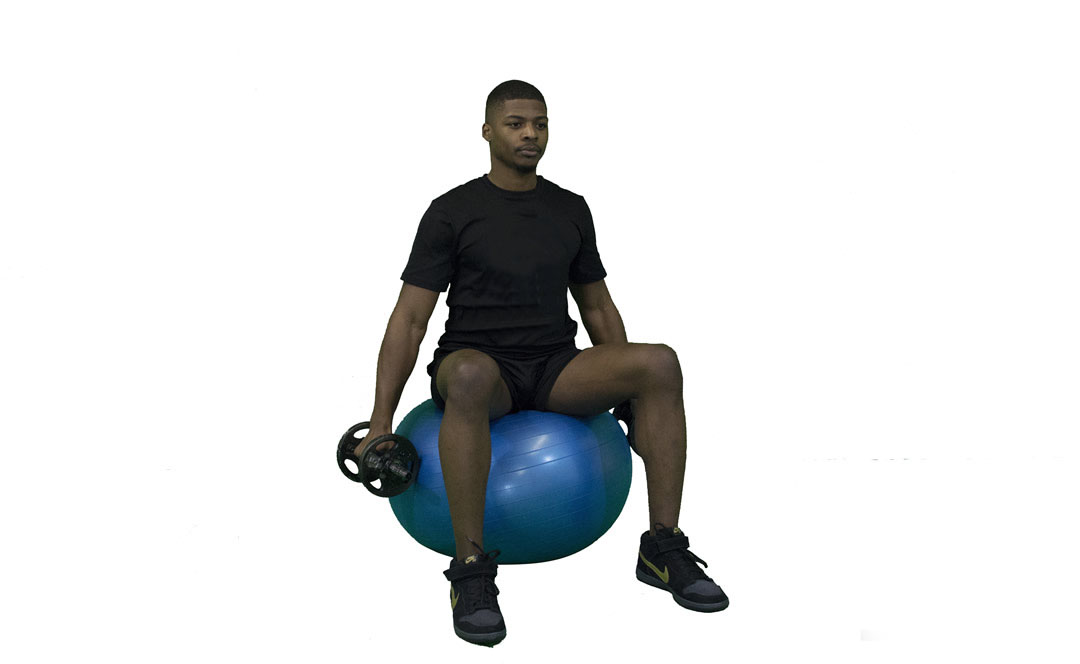
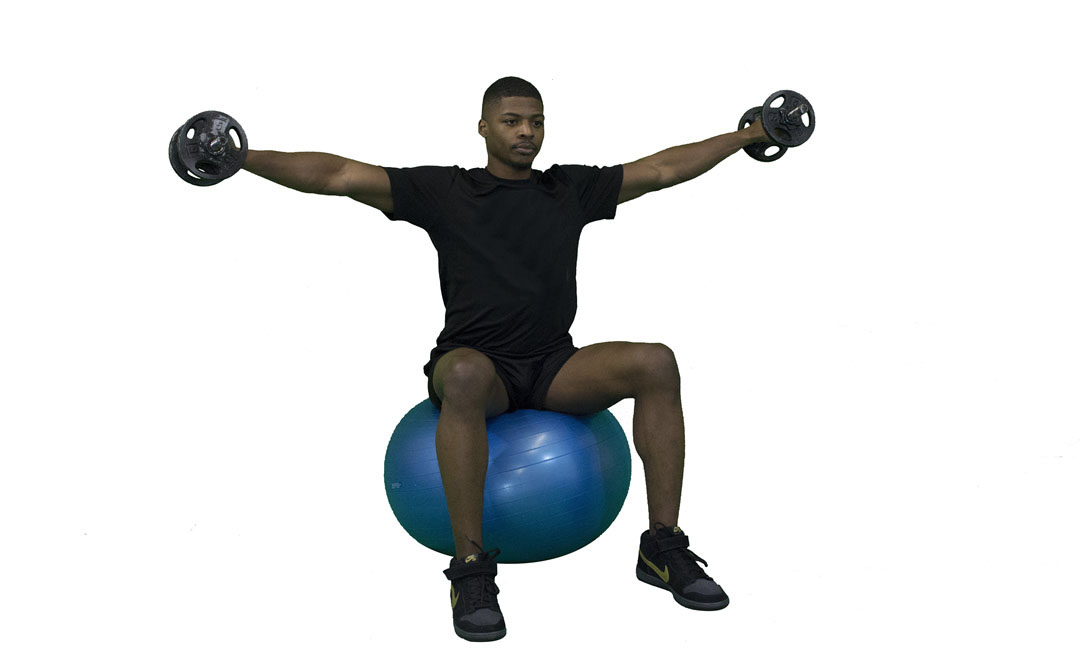
Instructions
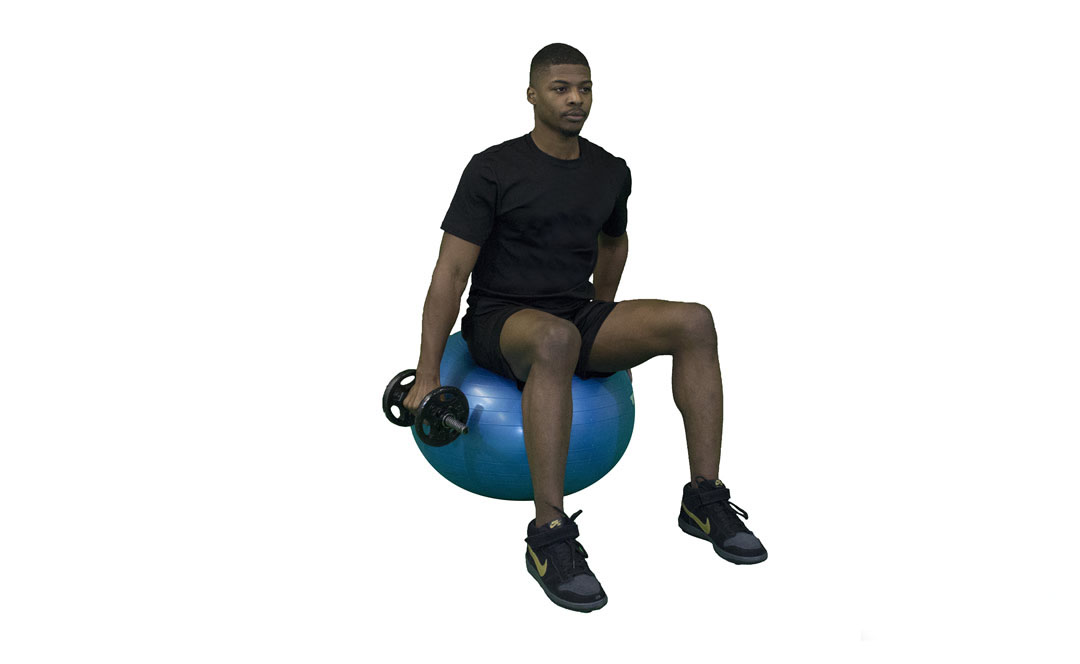
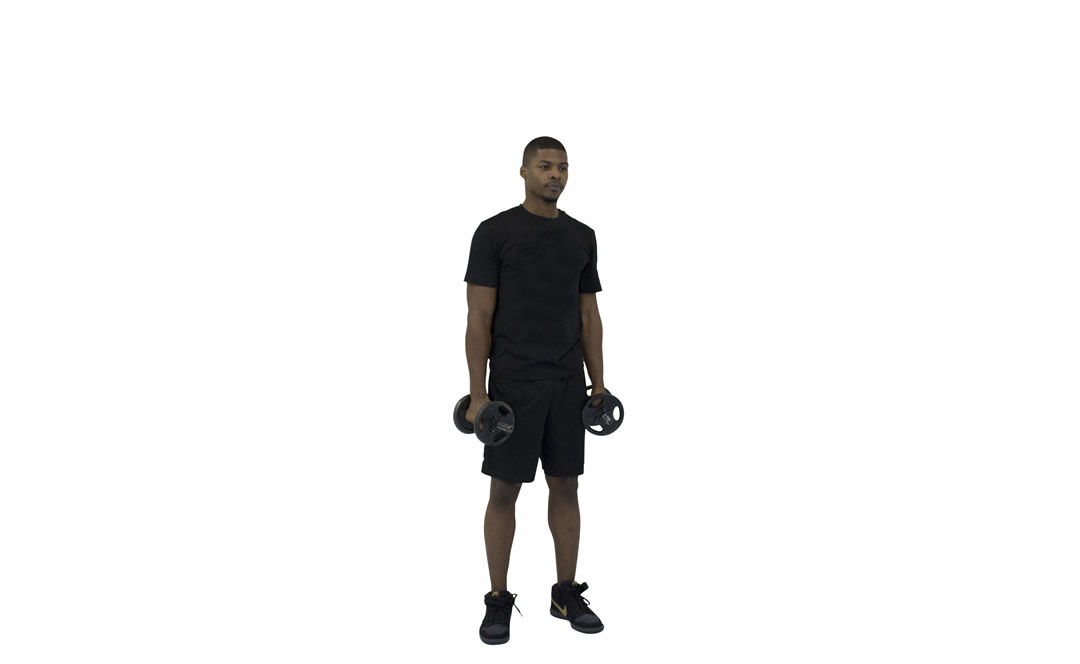
- Set up securely: Sit tall near the center of a properly inflated stability ball with both feet flat and about hip-width apart. Hold a light dumbbell in each hand by your sides with palms facing inward.
- Find a stable posture: Brace your abdomen gently, keep your chest lifted, and maintain a neutral spine. Let the dumbbells hang without shrugging your shoulders.
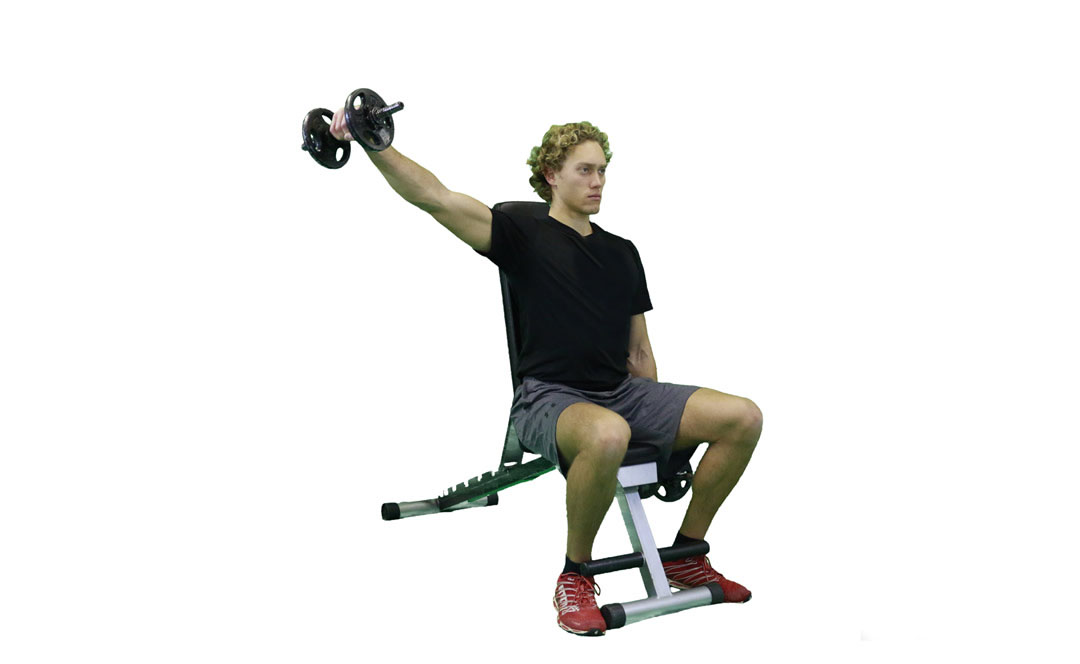
- Raise with control: Keeping a soft bend in the elbows, lift both arms out to the sides until the dumbbells reach approximately shoulder height. Keep the wrists neutral and lead with the elbows.
- Pause without losing position: Briefly hold the top position while keeping the shoulders down and the ball still; do not lean, bounce, or swing the weights.
- Lower slowly: Return the dumbbells to your sides under control and reset your balance before the next repetition. Stop if you cannot remain steady on the ball.