Smart Workout Diary
Dumbbell Posterior Fly on Stability Ball
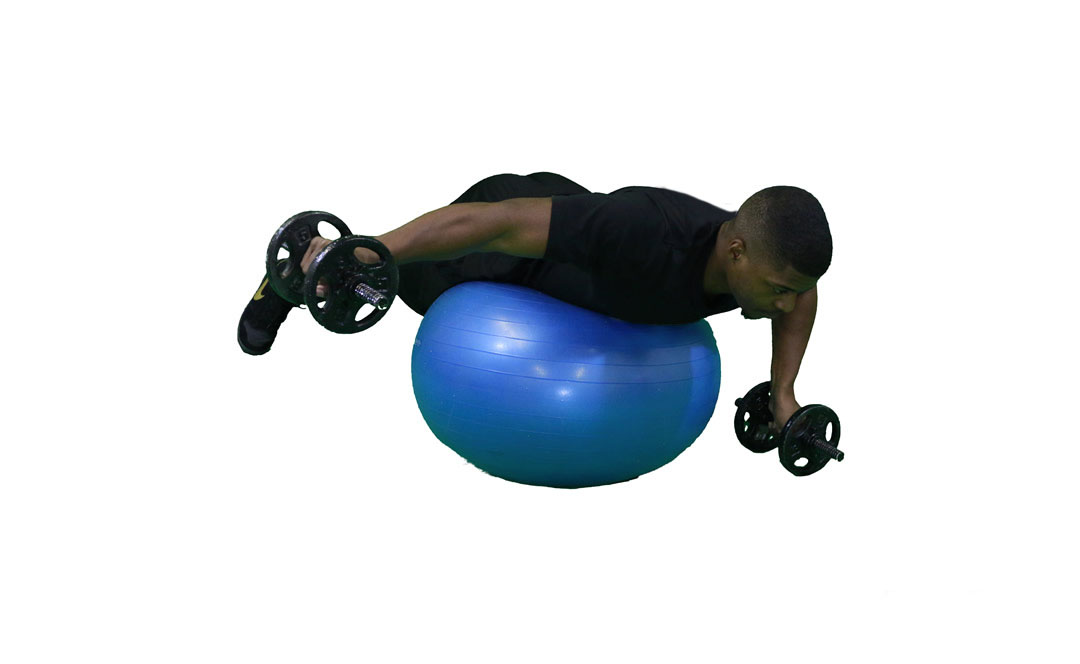
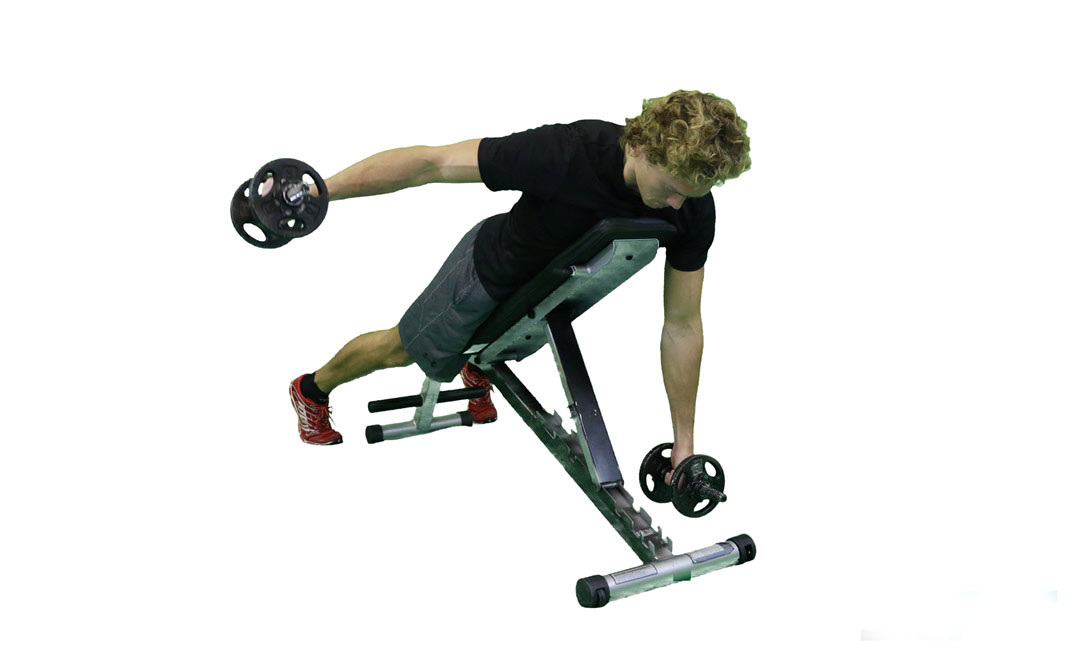
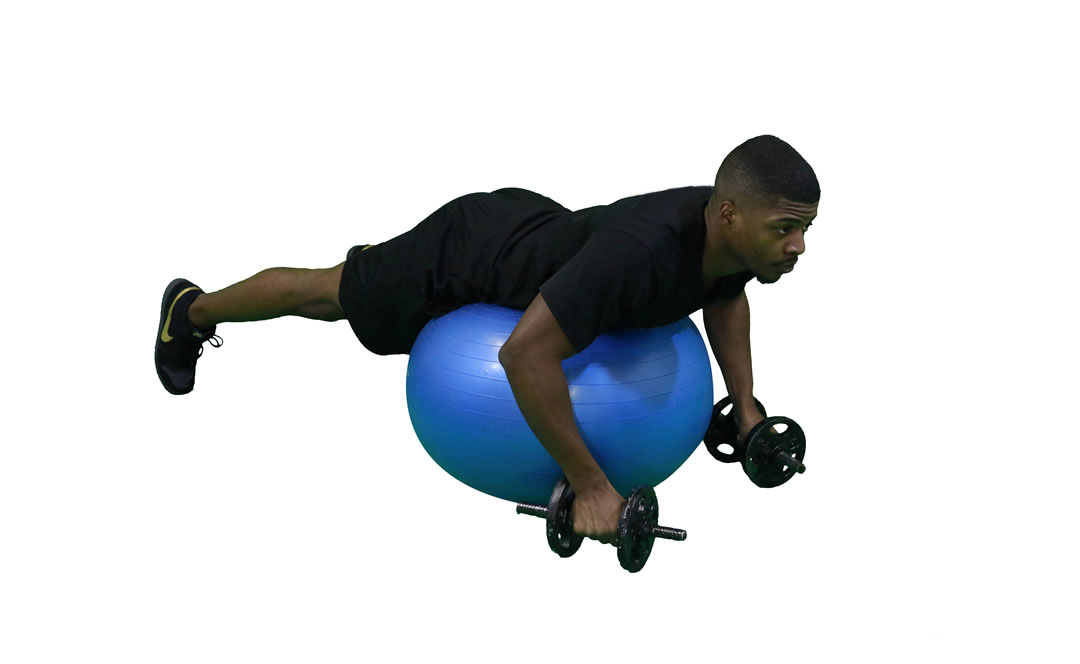
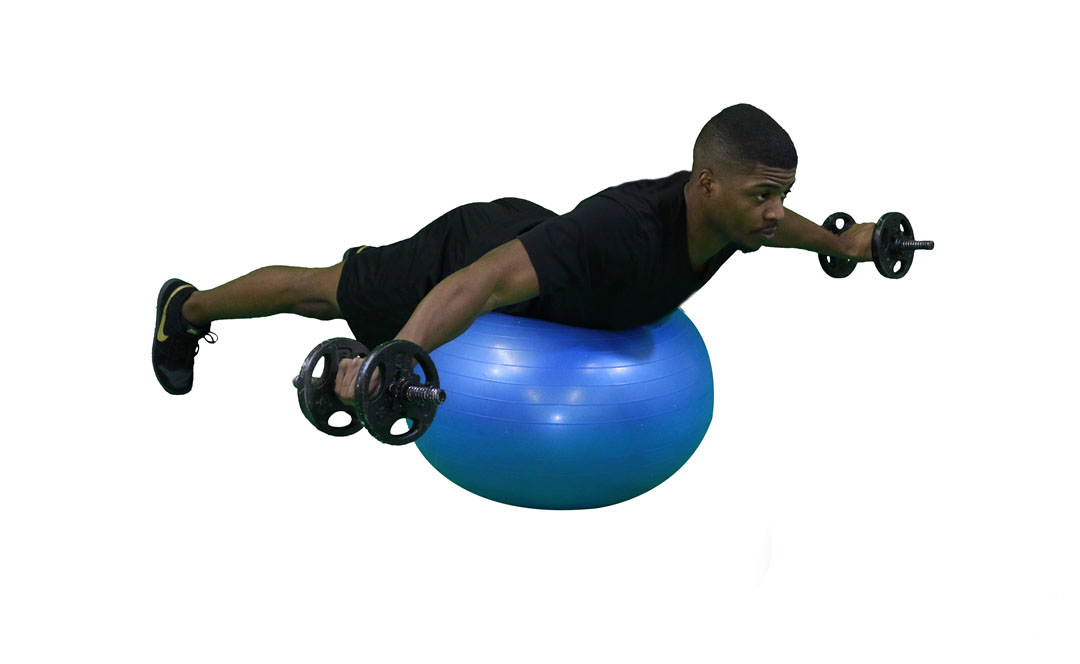
The dumbbell posterior fly on a stability ball is a chest-supported rear-delt exercise performed while lying face down on the ball. It primarily trains the rear deltoids, with assistance from the upper back muscles that control the shoulder blades. The ball-supported position can limit momentum and helps develop shoulder strength, posture, and upper-body control.
Demonstration
Instructions
- Set up the ball: Place a stability ball on a non-slip surface and hold a light dumbbell in each hand.
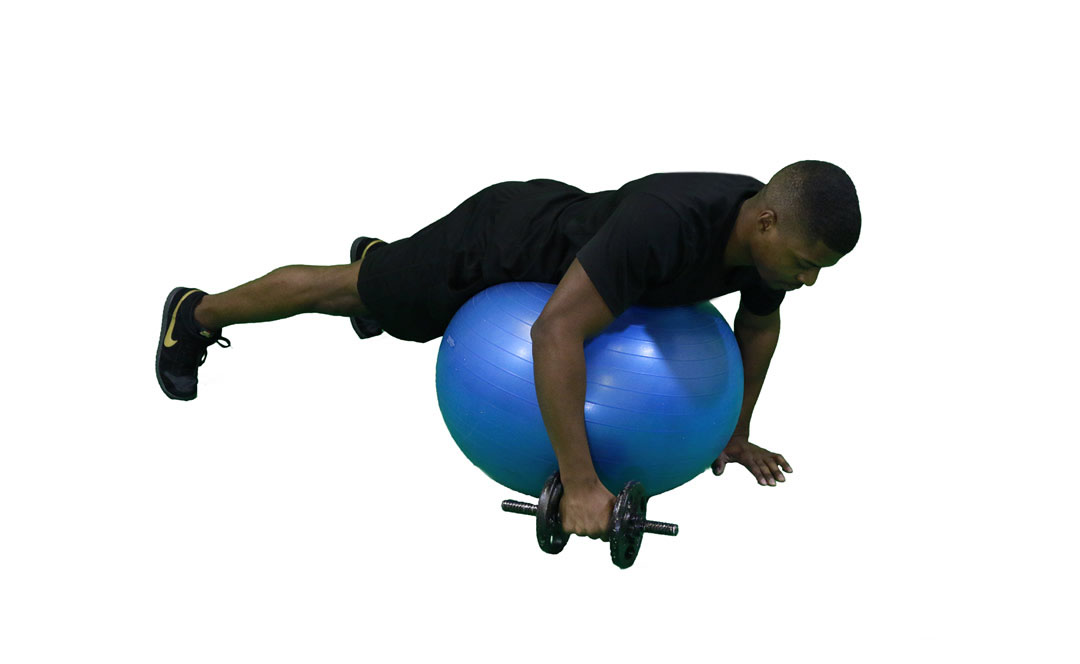
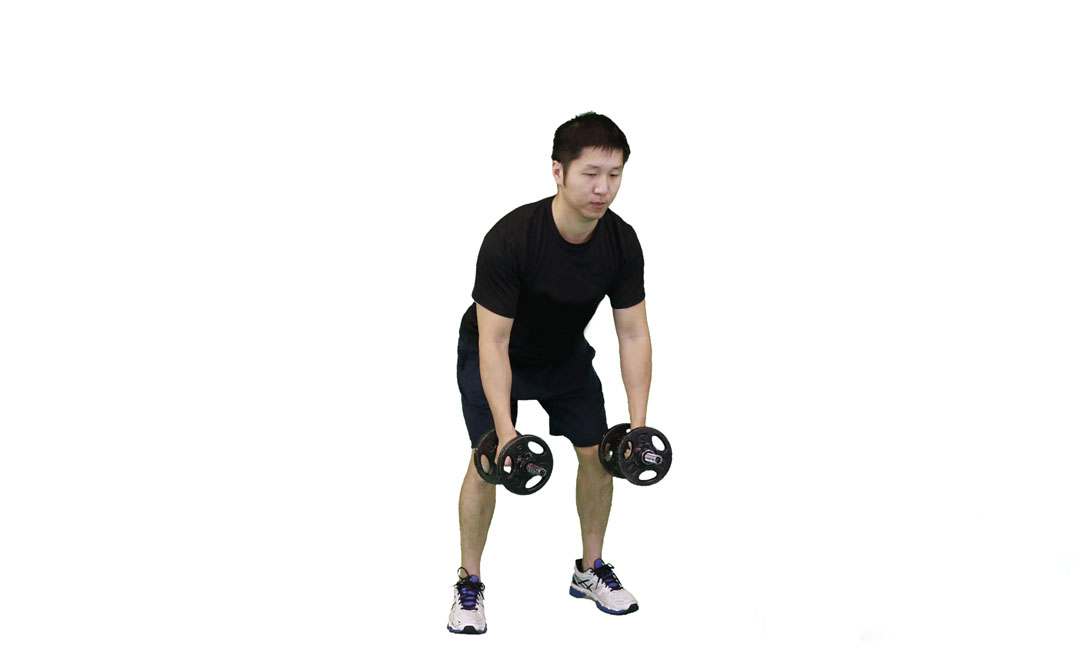
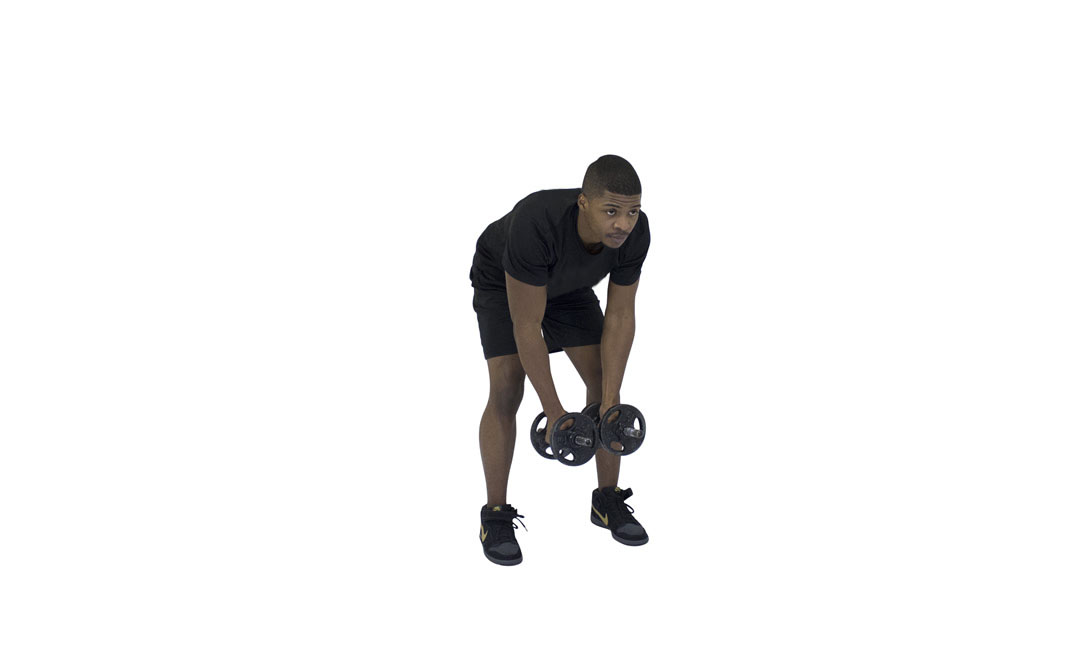
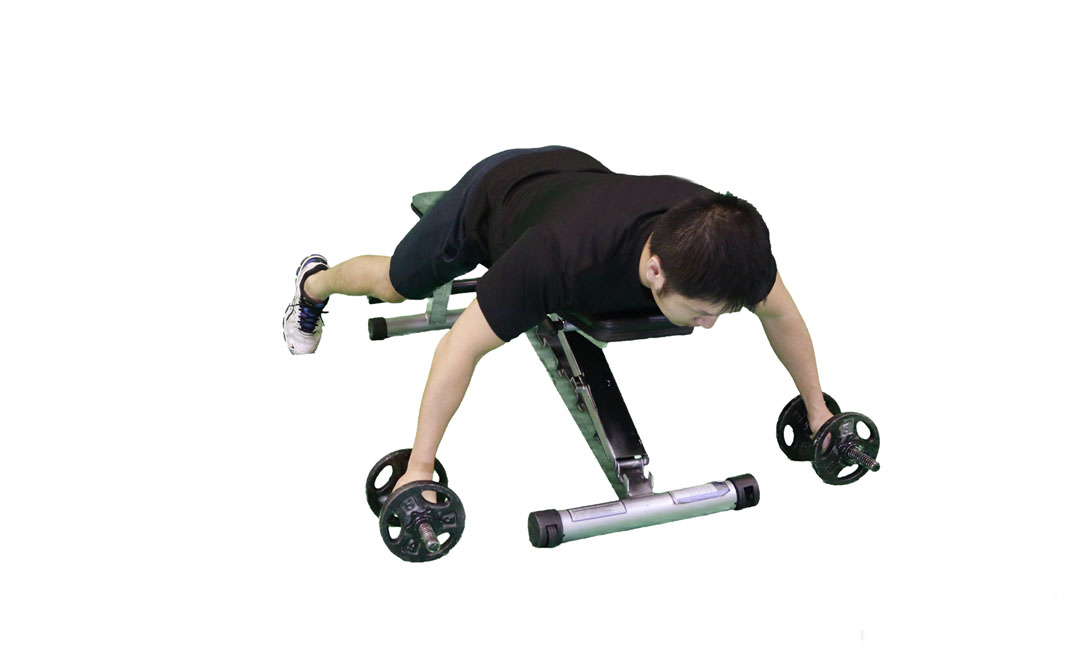
- Take the position: Lie face down with your chest supported on the ball, feet planted wide for balance, knees softly bent, and arms hanging below your shoulders with palms facing each other.
- Brace and set the shoulders: Keep your neck long, lightly brace your abdomen, and draw your shoulder blades gently down and back without shrugging.
- Raise the dumbbells: With a slight bend in the elbows, lift both arms out to the sides until they are roughly in line with your torso. Move smoothly and keep the wrists neutral.
- Lower with control: Pause briefly, then lower the dumbbells slowly until the arms hang under the shoulders. Do not let the weights pull your shoulders forward.
- Finish safely: Complete all repetitions under control, place the dumbbells on the floor, and step away from the ball carefully.