Smart Workout Diary
Foam Rolling
Foam rolling is a self-massage practice that uses a firm foam roller to apply pressure to muscles and surrounding soft tissue. It is commonly used before or after training to support short-term range of motion, reduce feelings of tightness, and promote recovery. The emphasis varies with the area rolled, often including the upper legs, glutes, calves, and back.
Demonstration
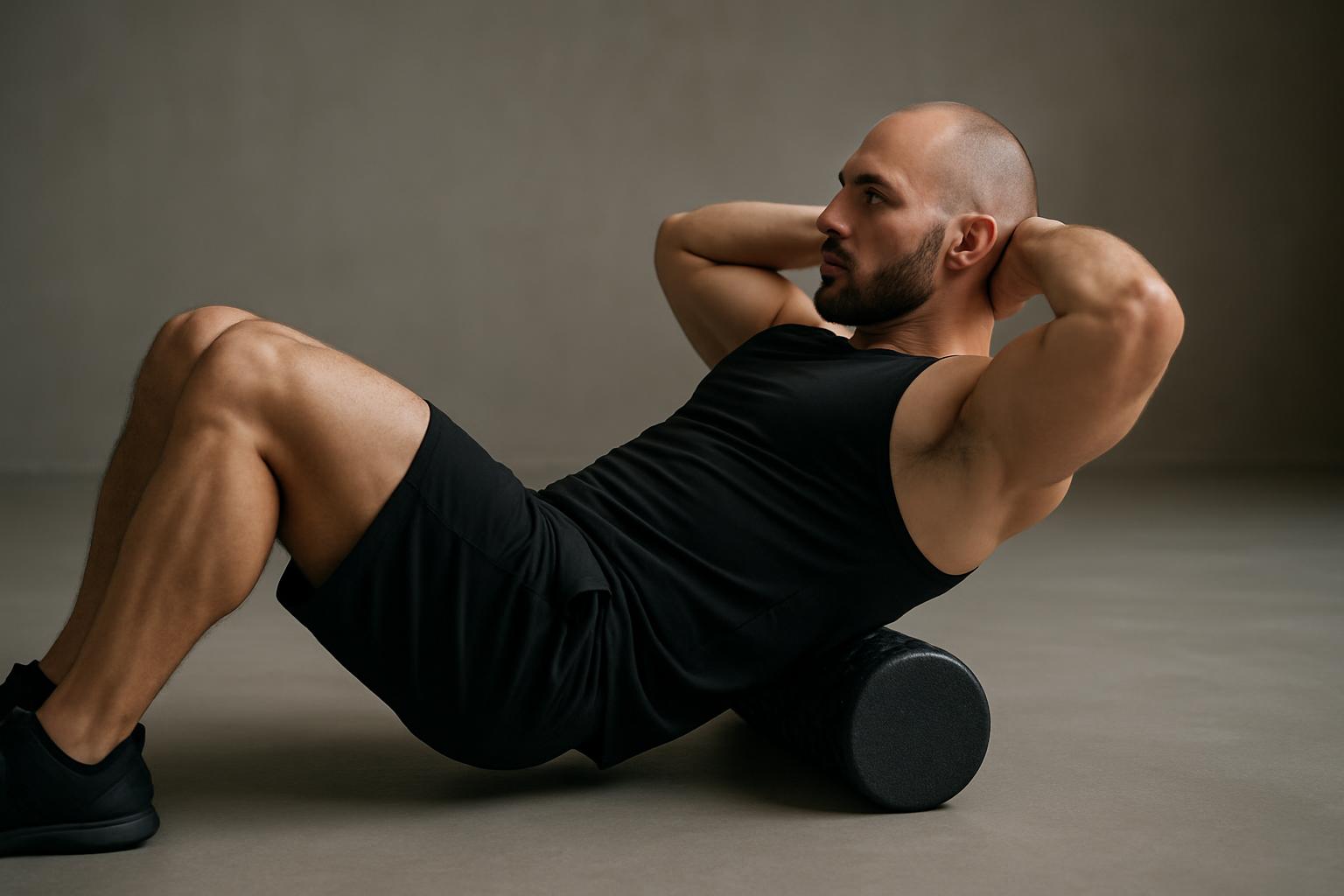
Instructions
- Choose one muscle area to work, such as a calf, glute, thigh, or upper back, and place the foam roller on a firm, clear floor.
- Position the roller under the chosen muscle and use your hands and feet to support part of your body weight. Keep your neck relaxed and your spine comfortably aligned.
- Roll slowly back and forth over the soft tissue with short, controlled movements. Use steady breathing and adjust how much weight you place on the roller.
- Pause briefly on a sensitive but tolerable spot, then continue rolling slowly. Pressure should feel manageable, not sharp or alarming.
- Cover the area gradually for a short period, then reposition for another muscle group if desired. Avoid rolling directly over joints, bones, the front or sides of the neck, or the low back.
- Finish gently by standing up with control and reassessing how the area feels before exercising or moving on.