Smart Workout Diary
Barbell JM Press
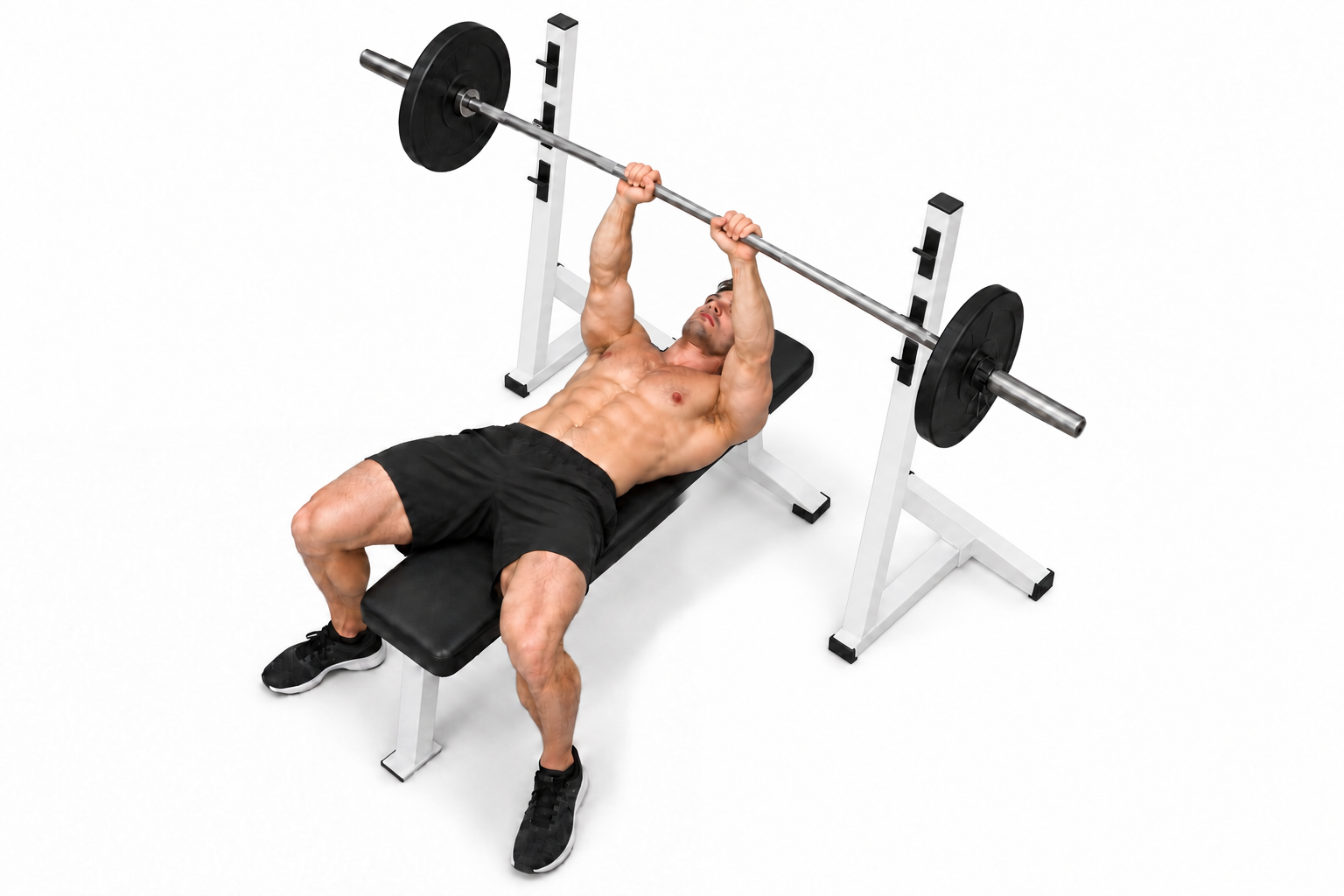
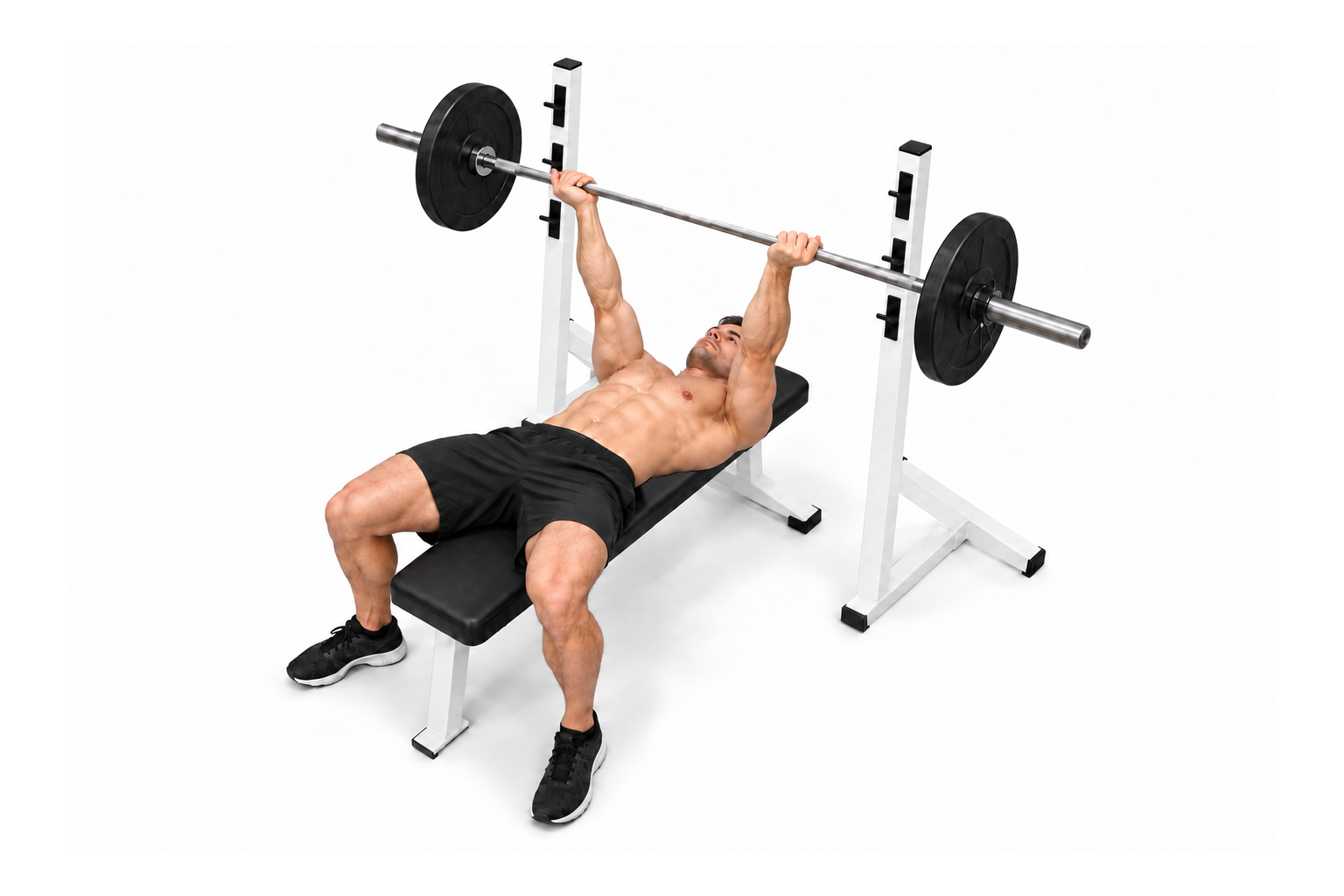
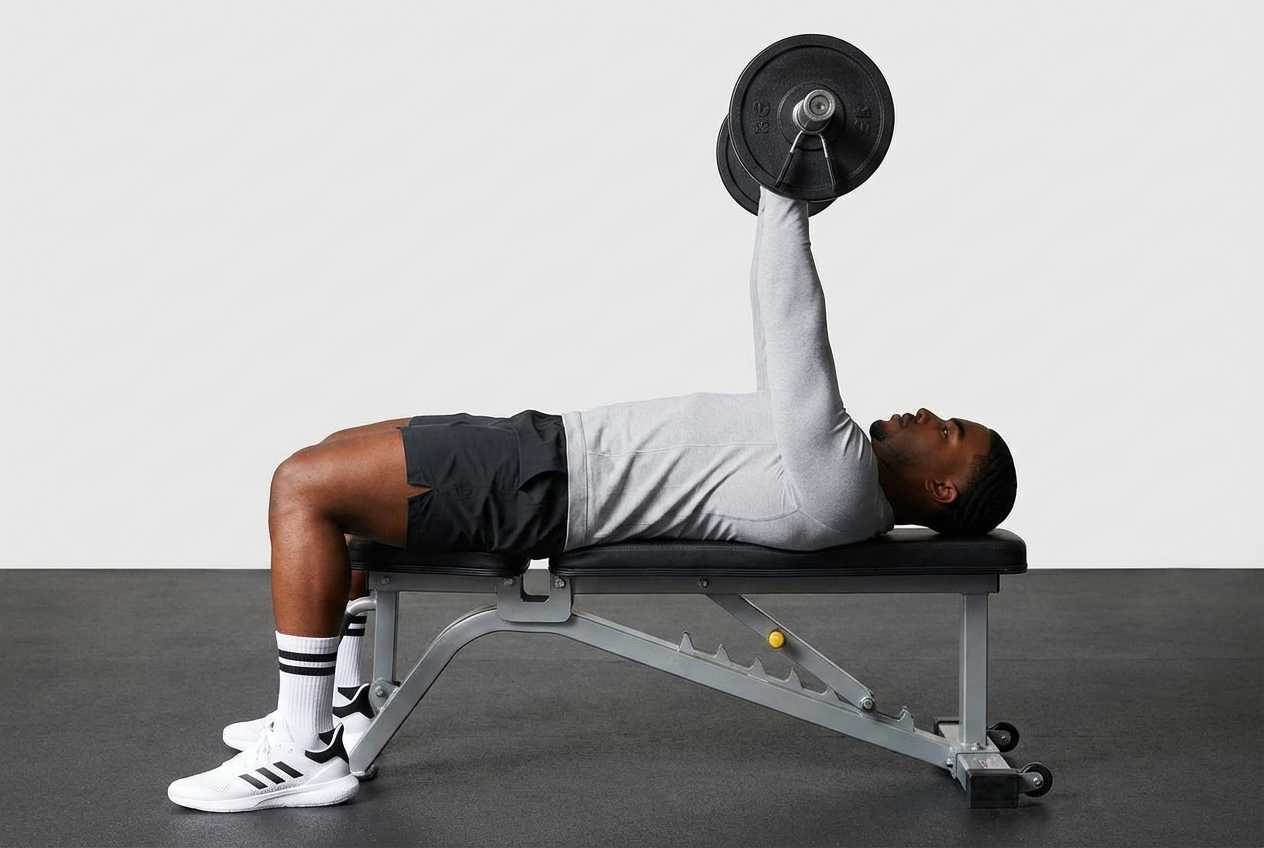
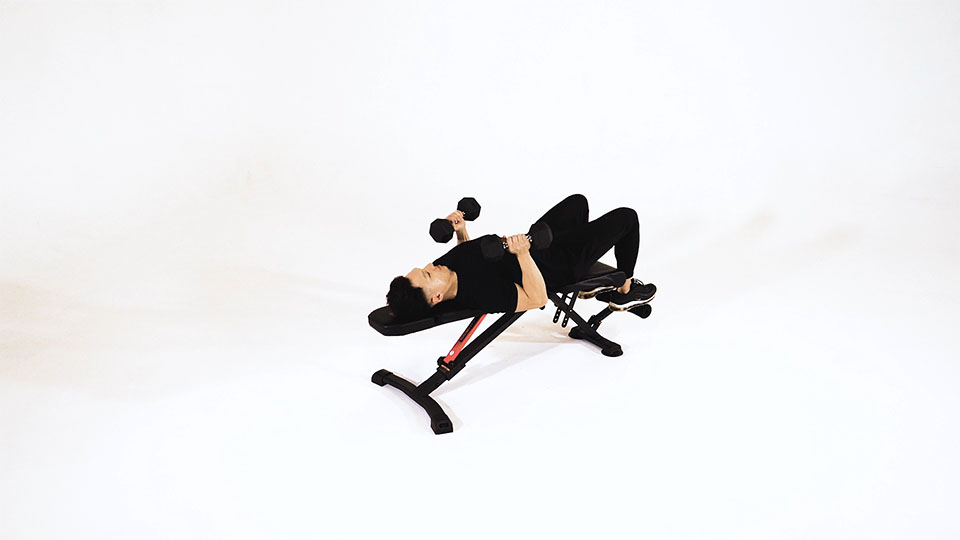
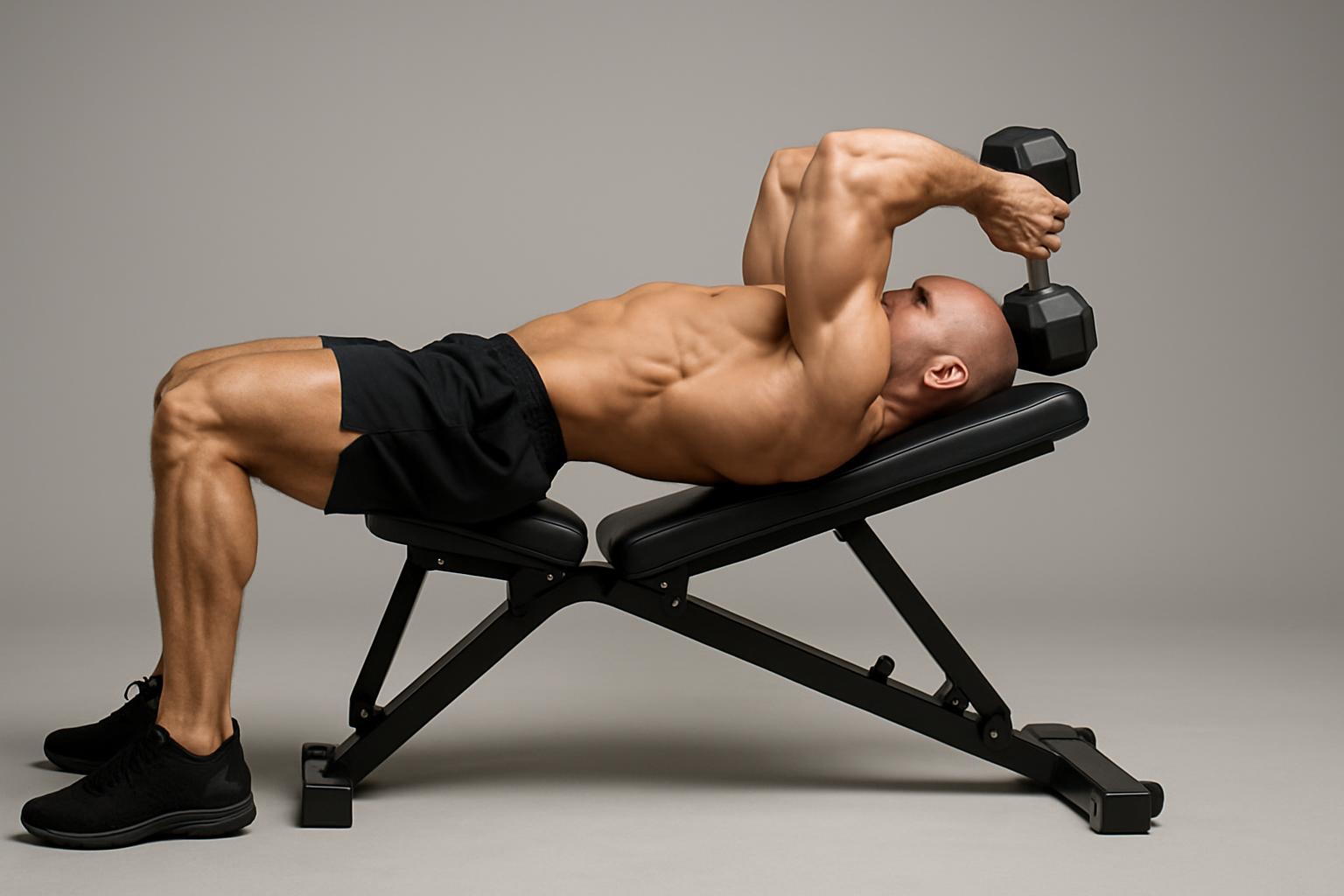
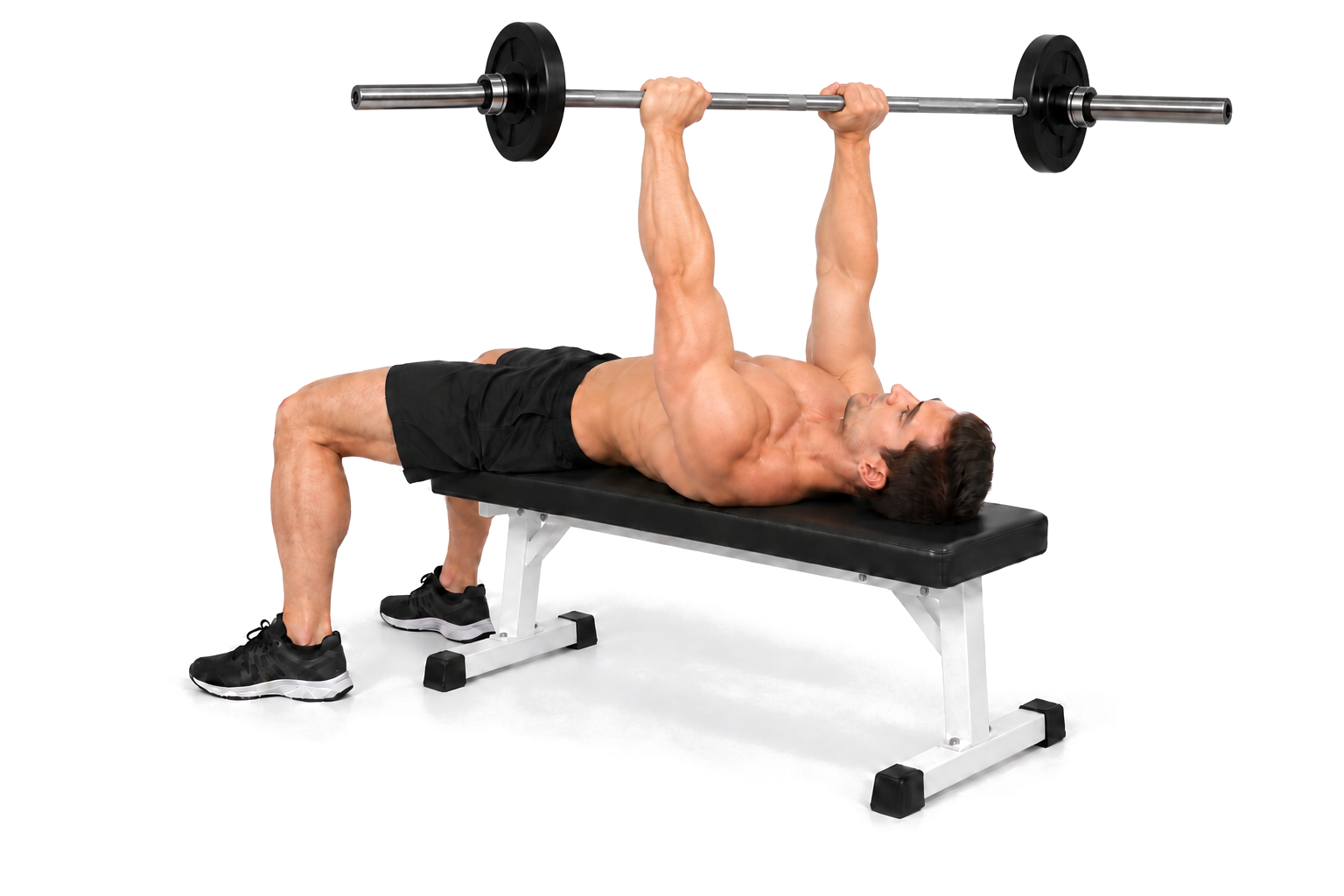
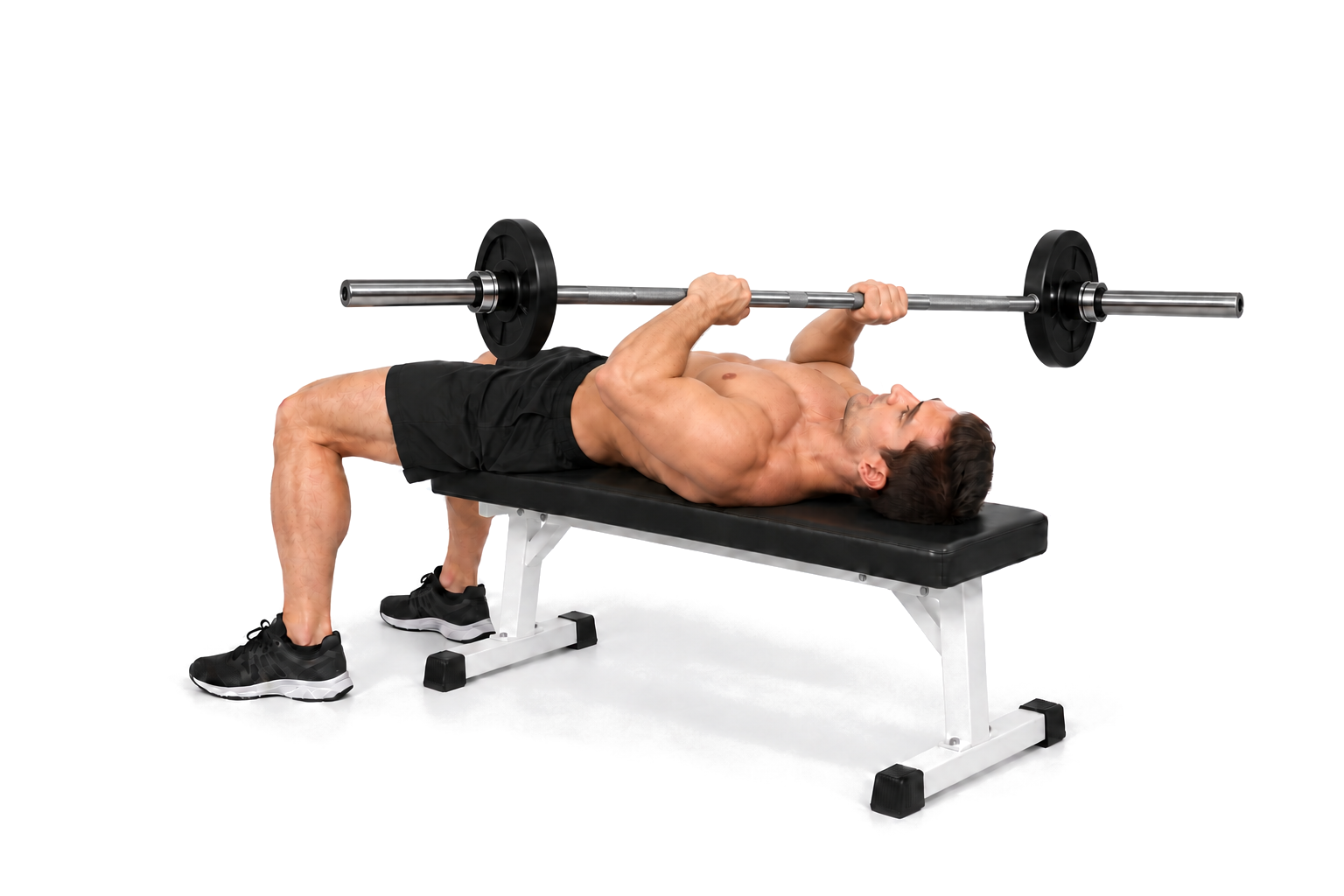
The Barbell JM Press is a barbell pressing exercise that blends elements of a close-grip bench press and a lying triceps extension. It primarily targets the triceps while the chest and shoulders assist with pressing and stabilization. It is used to build triceps strength and improve lockout strength for pressing movements.
Demonstration
Instructions
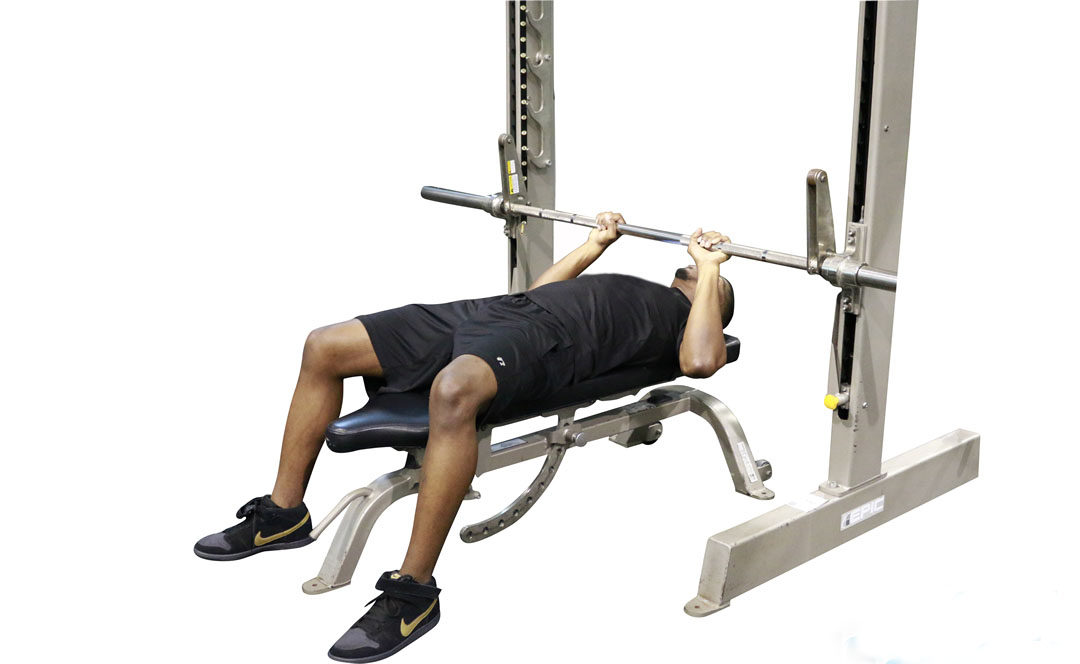
- Set a barbell in a rack above a flat bench and use a load you can control. Lie on the bench with your eyes under the bar, feet planted firmly, and upper back and glutes in contact with the bench.
- Grip the bar slightly narrower than shoulder width. Unrack it with straight arms and hold it above the upper chest with wrists stacked over the forearms.
- Lower under control by bending the elbows and allowing them to travel slightly forward. Bring the bar toward the upper chest or lower face area while keeping the upper arms at a moderate angle from the torso.
- Stop before the bar contacts the neck or face, with the forearms still supporting the bar securely. Keep your wrists neutral and avoid letting the elbows flare widely.
- Press the bar back by extending the elbows, guiding it to the start position over the upper chest. Exhale through the pressing phase and keep your shoulders stable on the bench.
- Rack the bar carefully after the set. Use safety pins or a spotter when appropriate, especially while learning the movement or using challenging loads.