Smart Workout Diary
Dumbbell One-Arm Pullover Stability Ball
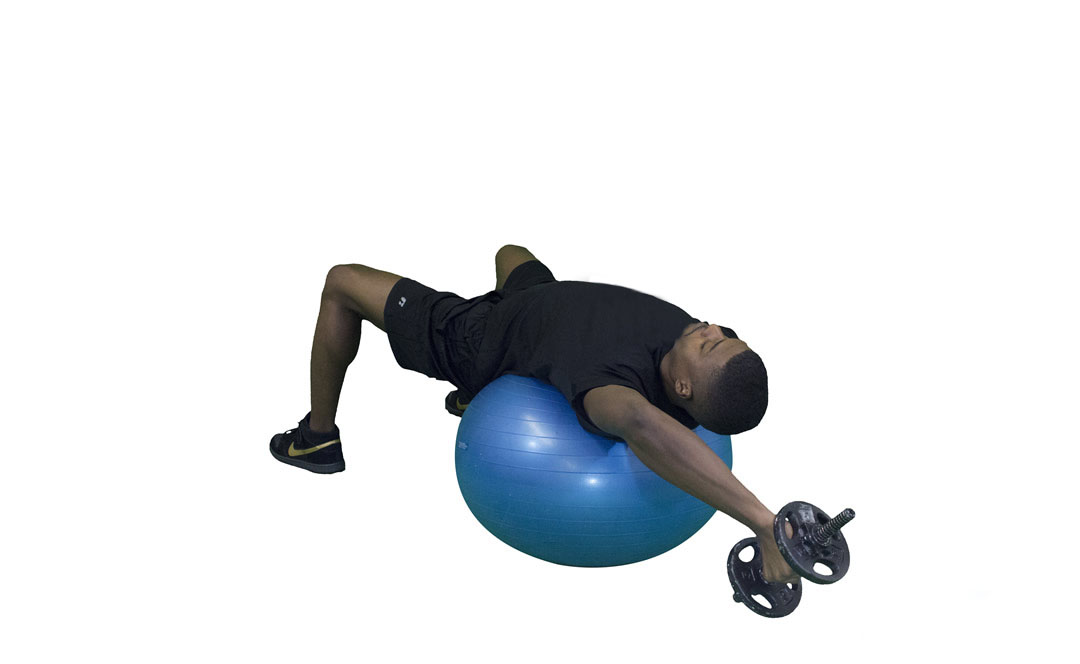
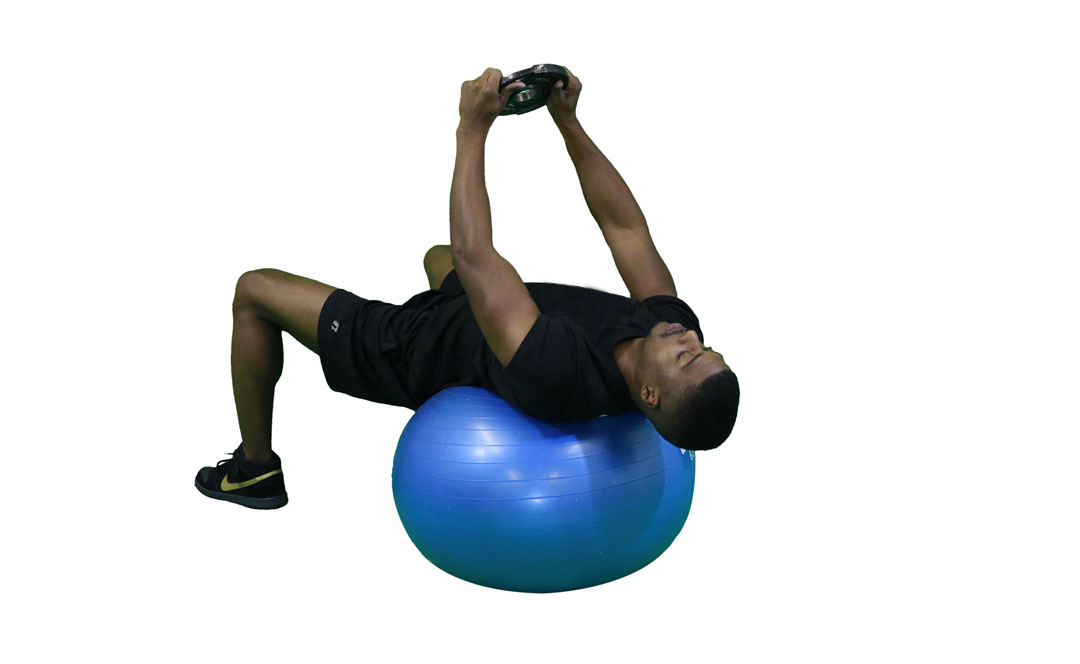
The single-arm dumbbell stability ball pullover is a controlled lying exercise performed with the upper back supported on a stability ball. It primarily trains the lats through shoulder extension while also involving the chest, triceps, and core to control the dumbbell and keep the body steady. It can support upper-body strength, shoulder control, and core stability.
Demonstration
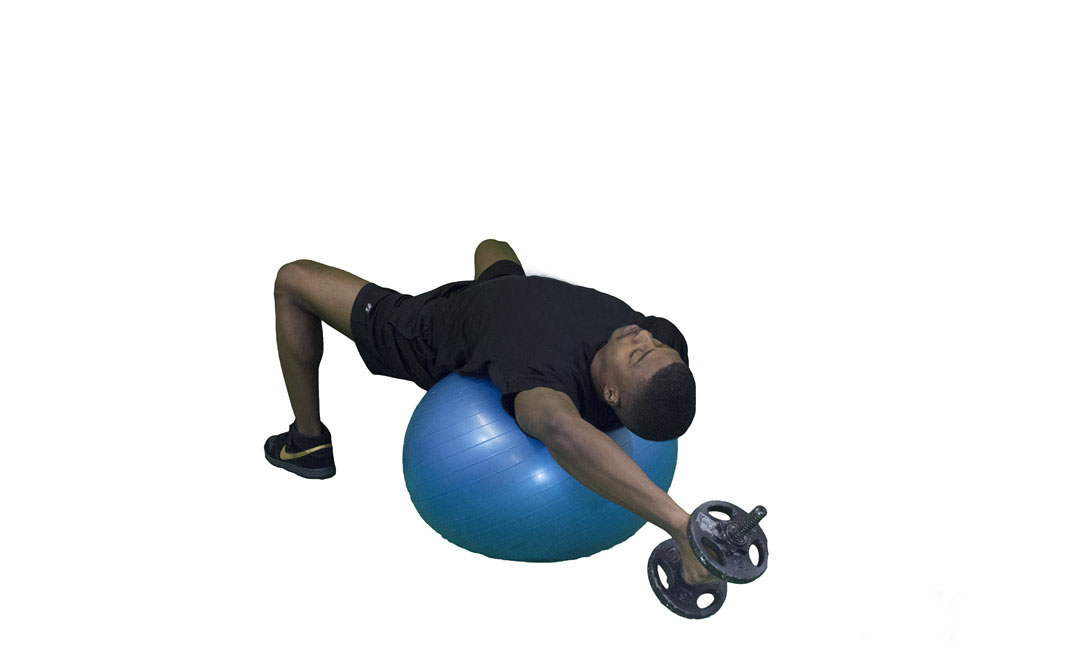
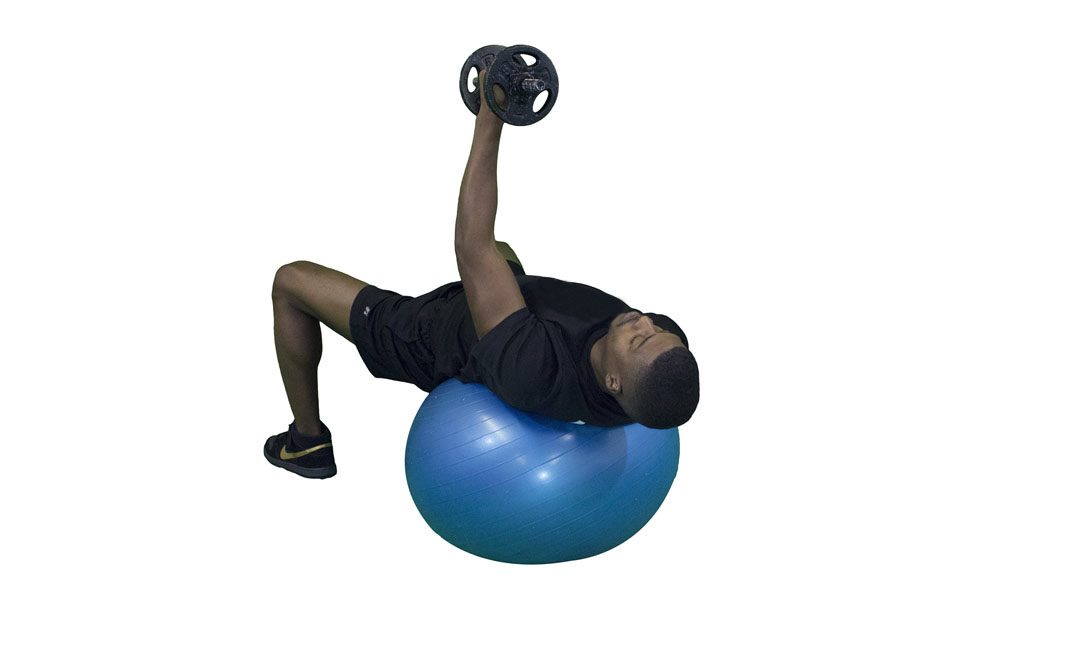
Instructions
- Set up the ball: Hold one dumbbell securely and rest your upper back and shoulder blades across the stability ball. Plant your feet about hip-width apart, bend the knees, and lift the hips until your torso is nearly parallel with the floor.
- Start overhead: Hold the dumbbell above your chest with one arm, palm supporting one end of the dumbbell. Keep a soft bend in the elbow, brace the abdomen, and keep the neck relaxed.
- Lower with control: Inhale and slowly arc the dumbbell backward behind your head from the shoulder. Keep your hips level and your ribs from flaring as you lower only as far as your shoulders can move comfortably.
- Pull back to start: Exhale and use your lats to draw the dumbbell in the same arc back above your chest. Keep the elbow angle nearly unchanged and avoid rotating your torso.
- Repeat evenly: Complete the planned repetitions with control, then switch arms. Step off the ball carefully before changing or setting down the dumbbell.