Smart Workout Diary
Dumbbell Incline Press on Stability Ball
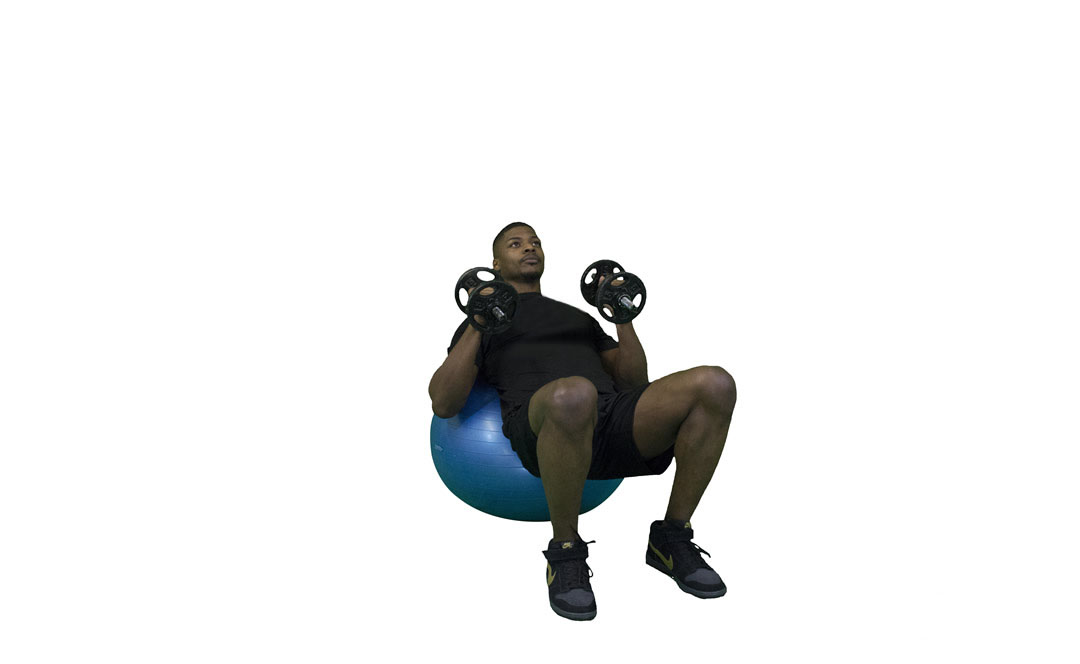
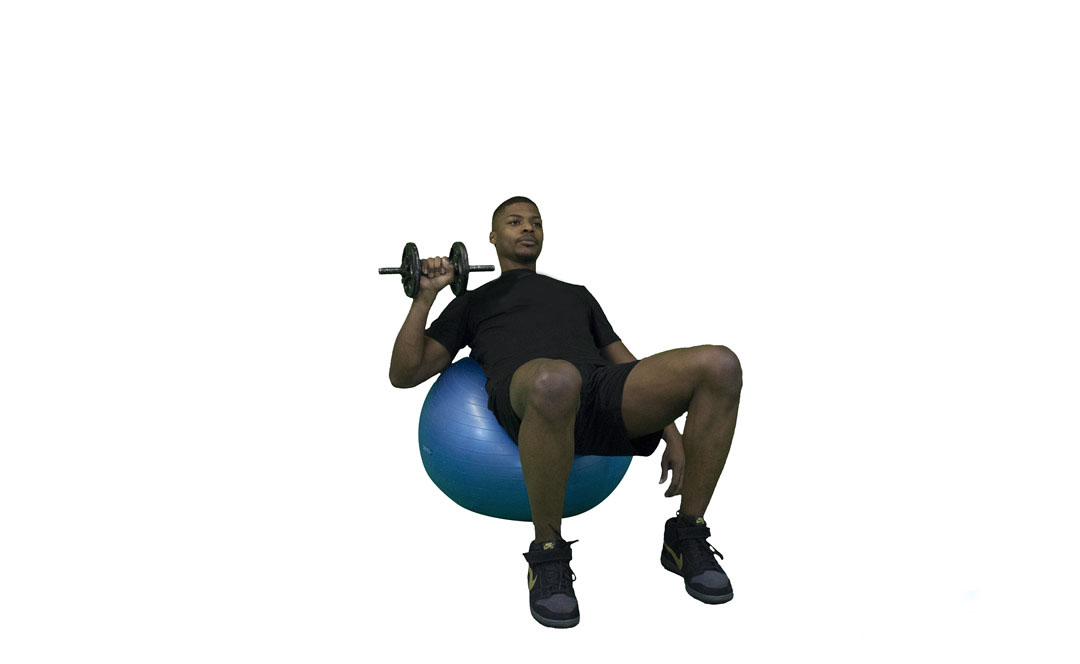
The dumbbell incline press on a stability ball is a chest press performed with the upper back supported on a stability ball and the hips held up to create an inclined torso position. It primarily targets the upper chest while also training the front shoulders, triceps, core, and hip stability. It supports upper-body pressing strength and coordination.
Demonstration
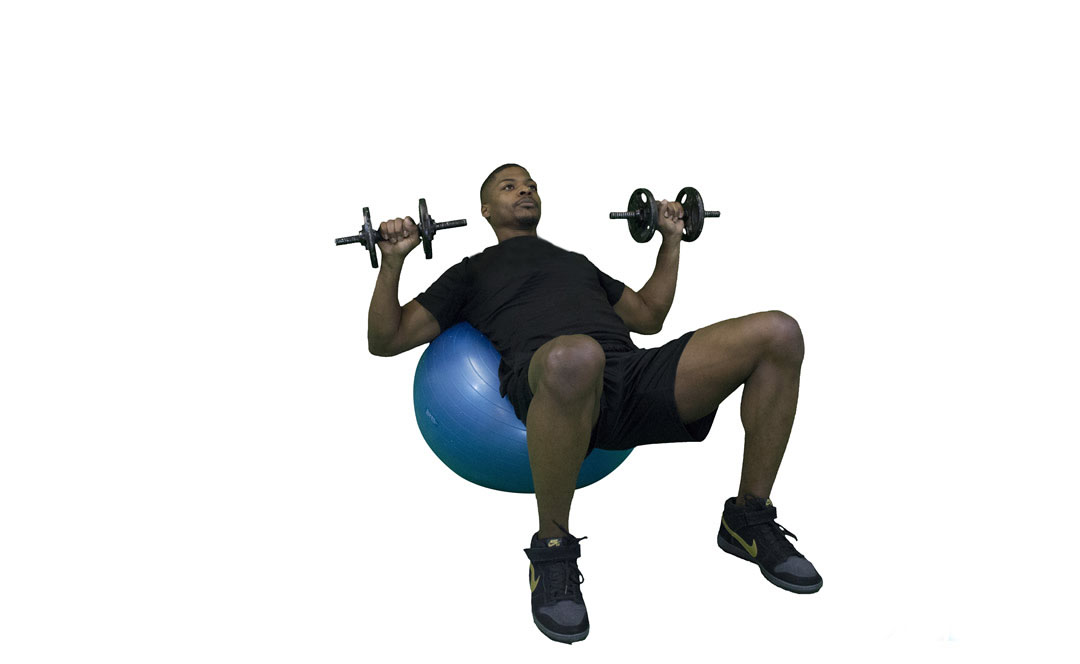
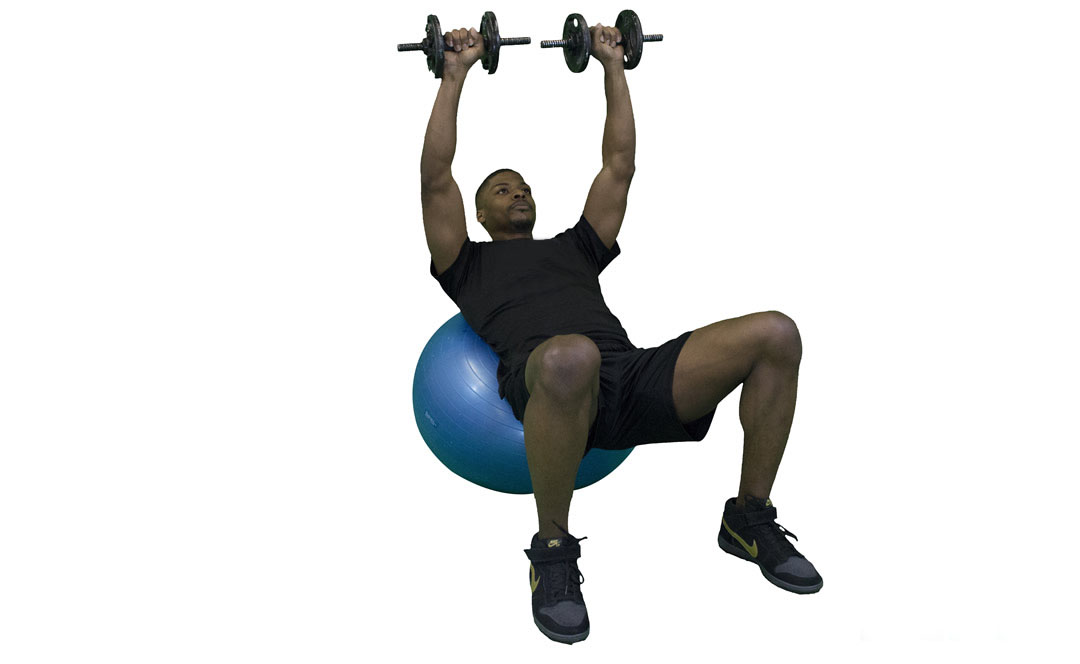
Instructions
- Set up safely: Hold a dumbbell in each hand and sit in front of a stability ball. Walk your feet forward until the ball supports your upper back and shoulders.
- Create the incline: Plant your feet about hip-width apart, bend the knees, and raise the hips until your body forms a straight line from knees through hips to shoulders. Keep the ball still.
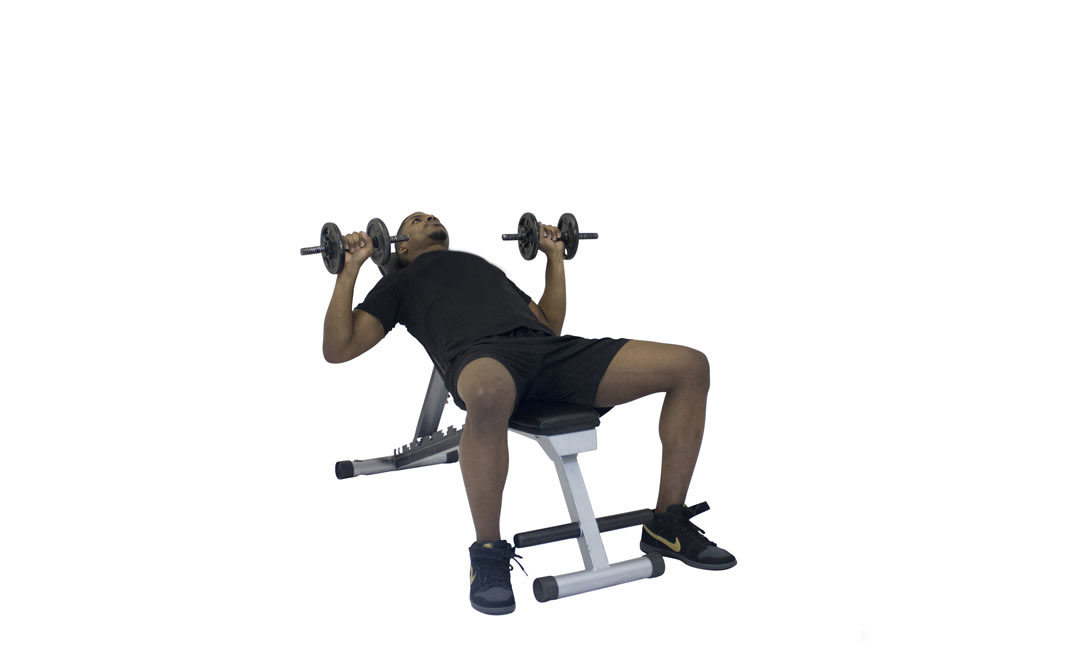
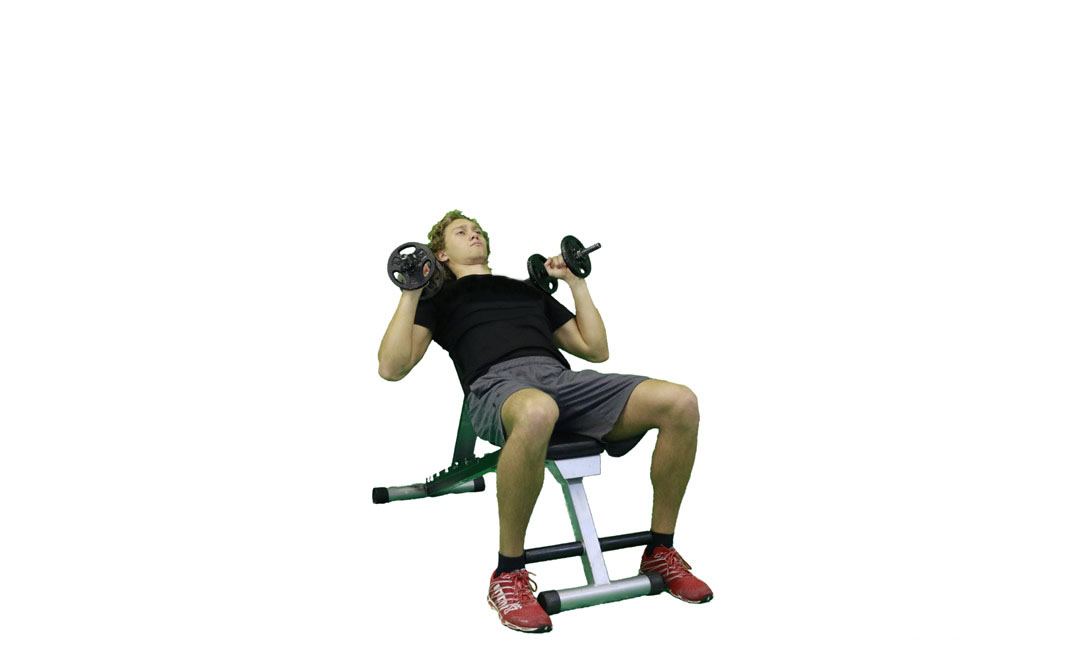
- Start the press: Hold the dumbbells beside the upper chest with palms facing forward or slightly inward. Keep the wrists stacked over the elbows and brace the abdomen.
- Press upward: Exhale as you press the dumbbells up and slightly together above the upper chest. Keep the shoulders down away from the ears and avoid locking the elbows forcefully.
- Lower with control: Inhale and lower the dumbbells slowly until the elbows are slightly below or level with the torso, provided the shoulders remain comfortable. Keep the hips lifted and the ball stable.
- Finish securely: Complete the set with controlled repetitions, then lower the dumbbells to the chest, sit upright carefully, and place them on the floor.