Smart Workout Diary
Wall Angel
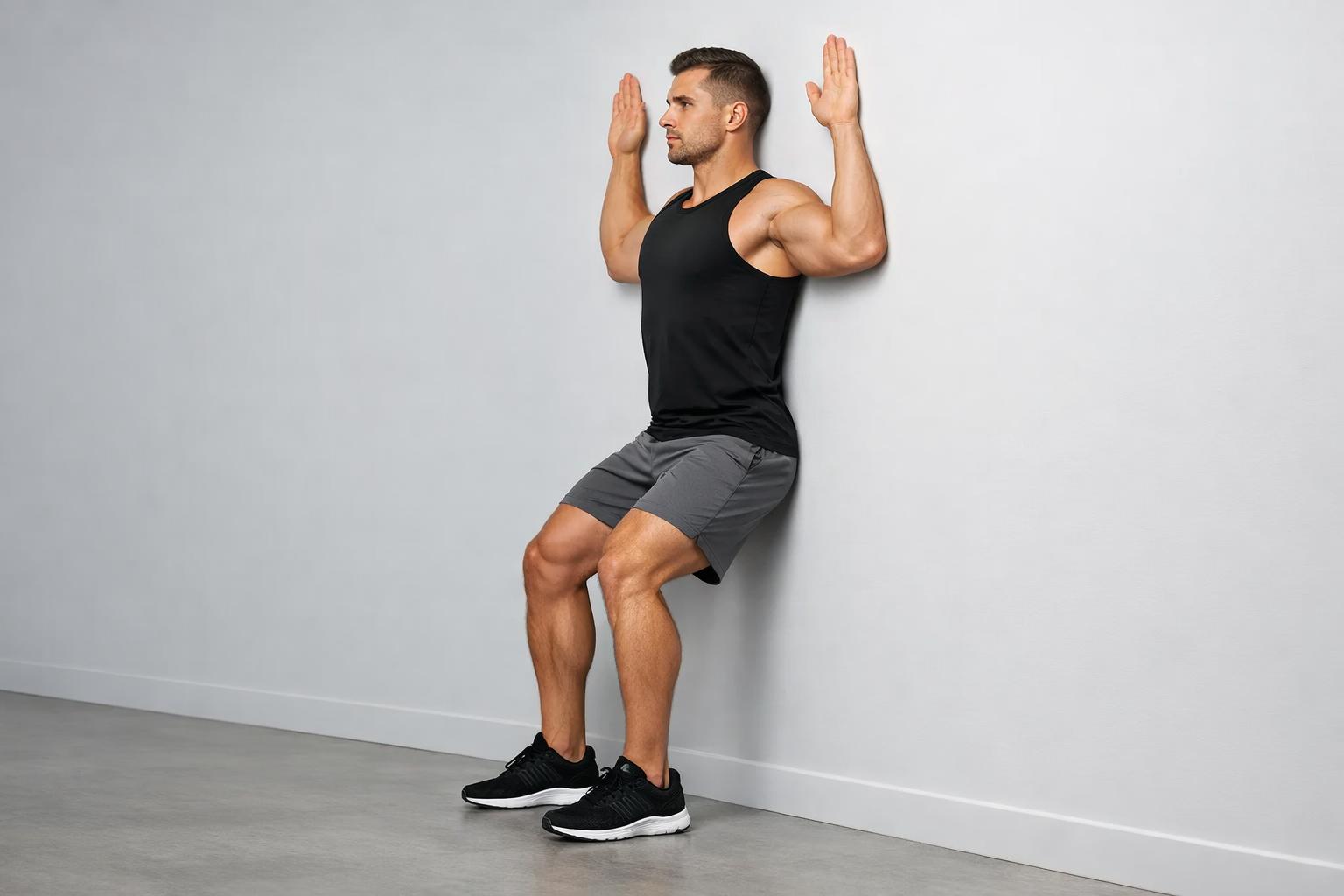
The wall angel is a posture and shoulder-mobility exercise performed with the back against a wall while the arms move through an overhead arc. It primarily trains shoulder control, upper-back engagement, and scapular mobility while encouraging a neutral ribcage and upright posture. It can support shoulder mobility, postural awareness, and preparation for overhead movements.
Demonstration
Instructions
- Set up against a wall: Stand with your back to a smooth wall, feet about 15–30 cm in front of it and about hip-width apart. Let your head, upper back, and hips rest lightly against the wall.
- Find a neutral position: Gently brace your abdomen and keep your ribs from flaring. Maintain a small natural space at the lower back; do not force the entire lower back flat against the wall.
- Start in a goalpost shape: Raise the arms to the sides with elbows bent about 90 degrees. Place the backs of the hands and arms against the wall only as far as you can without straining or arching.
- Slide upward slowly: Move both arms up the wall in a controlled arc, keeping the neck relaxed and the ribs stacked over the pelvis. Allow the arms to leave the wall slightly if needed to keep good spinal position.
- Return with control: Lower the arms back to the goalpost position slowly, drawing the shoulder blades smoothly around and down the ribcage. Do not shrug the shoulders toward the ears.
- Repeat comfortably: Use a pain-free range of motion and stop if you feel sharp pain, pinching, or numbness in the shoulders, neck, or arms.