Smart Workout Diary
Hip Hinge With Dowel Bodyweight
The bodyweight hip hinge with a dowel teaches the foundational movement of bending at the hips while maintaining a neutral spine. The dowel provides feedback for head, upper-back, and pelvic alignment as the glutes and hamstrings control the movement. It supports learning safe hinging mechanics for deadlifts, kettlebell swings, and everyday lifting.
Demonstration
Instructions
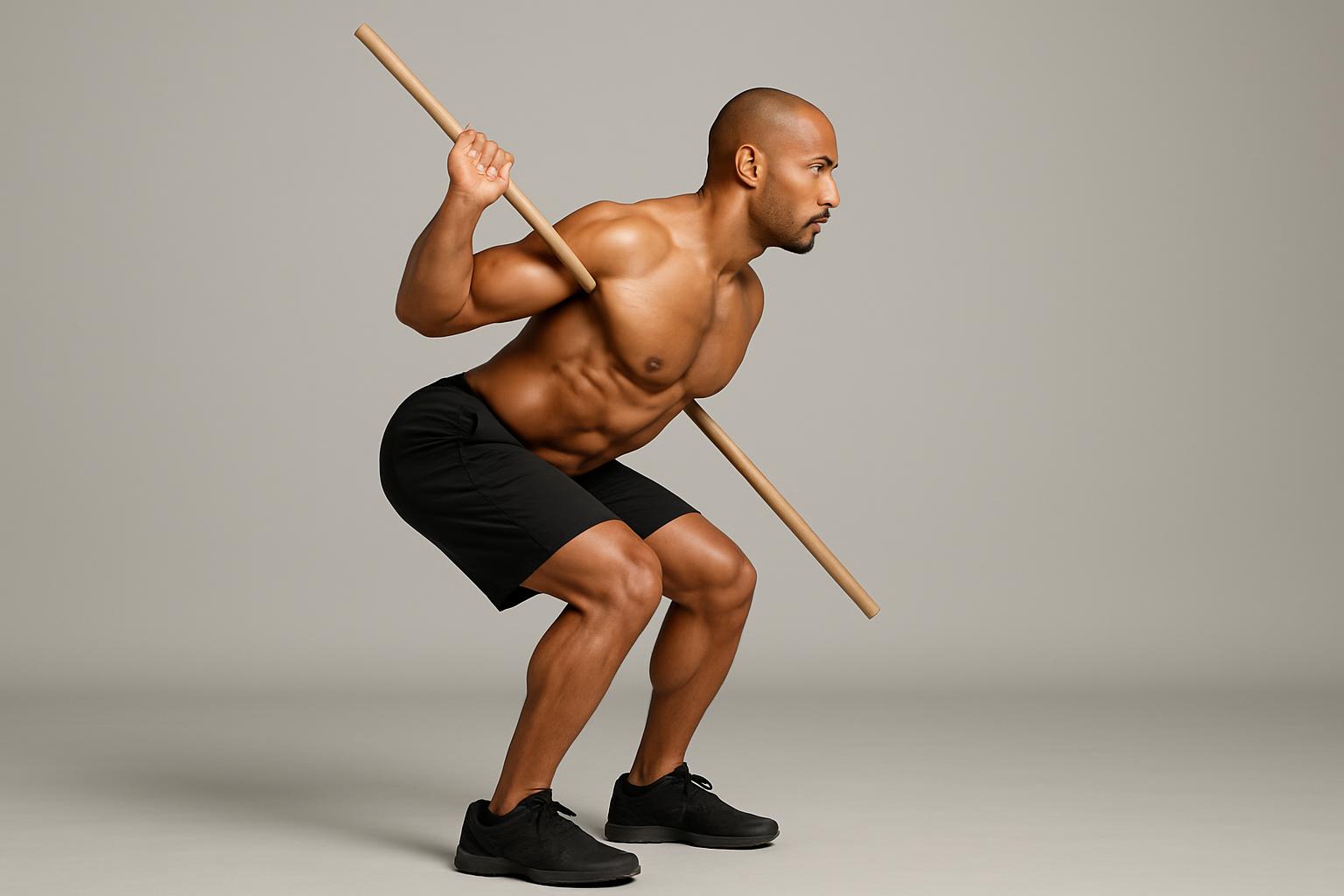
- Set up the dowel: Stand tall with feet about hip width apart and hold a dowel along your back with one hand behind your neck and the other behind your lower back.
- Find three contact points: Keep the dowel in contact with the back of your head, upper back, and sacrum throughout the movement.
- Brace and hinge: Soften your knees, brace your abdomen, and push your hips straight back as if reaching your glutes toward a wall behind you.
- Lower with control: Let your torso tip forward only as your hips travel back. Keep your chest long, shins nearly vertical, and the three dowel contact points intact.
- Stand up: Press your feet into the floor and squeeze your glutes to bring your hips forward until you are standing tall. Do not lean backward at the top.
- Repeat smoothly: Use a comfortable range of motion and stop if you cannot maintain neutral spinal alignment or dowel contact.