Smart Workout Diary
Barbell Bulgarian Split Squat
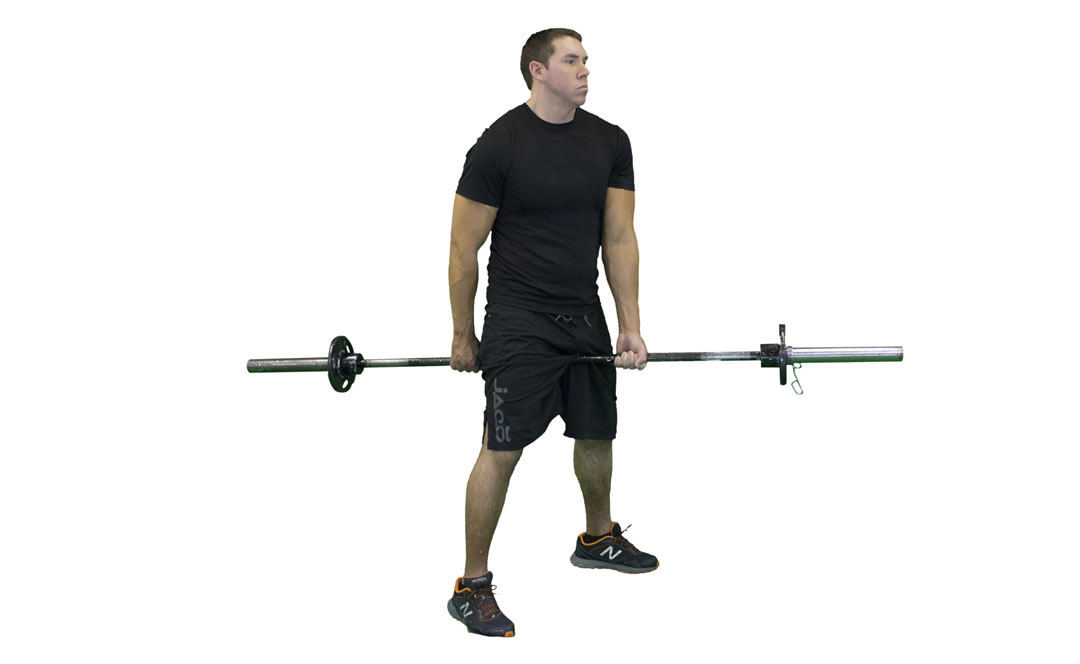
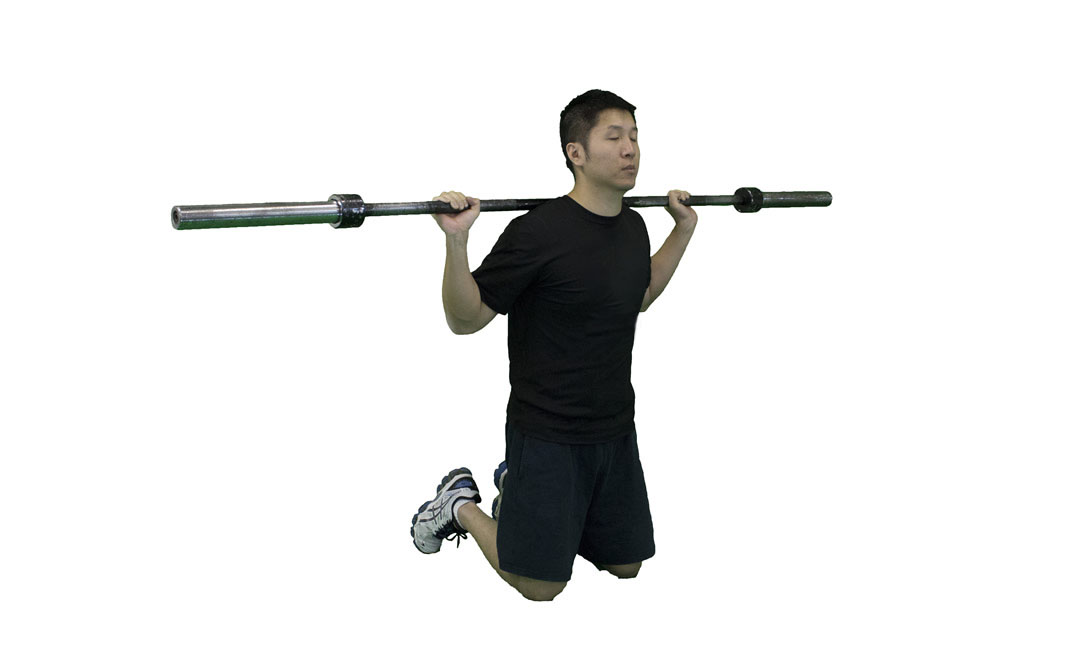
The barbell Bulgarian split squat is a unilateral lower-body strength exercise performed with the rear foot elevated on a bench and a barbell across the upper back. It primarily trains the quadriceps and glutes while challenging the hamstrings, calves, and trunk stabilizers. It supports leg strength, single-leg balance, and control between sides.
Demonstration
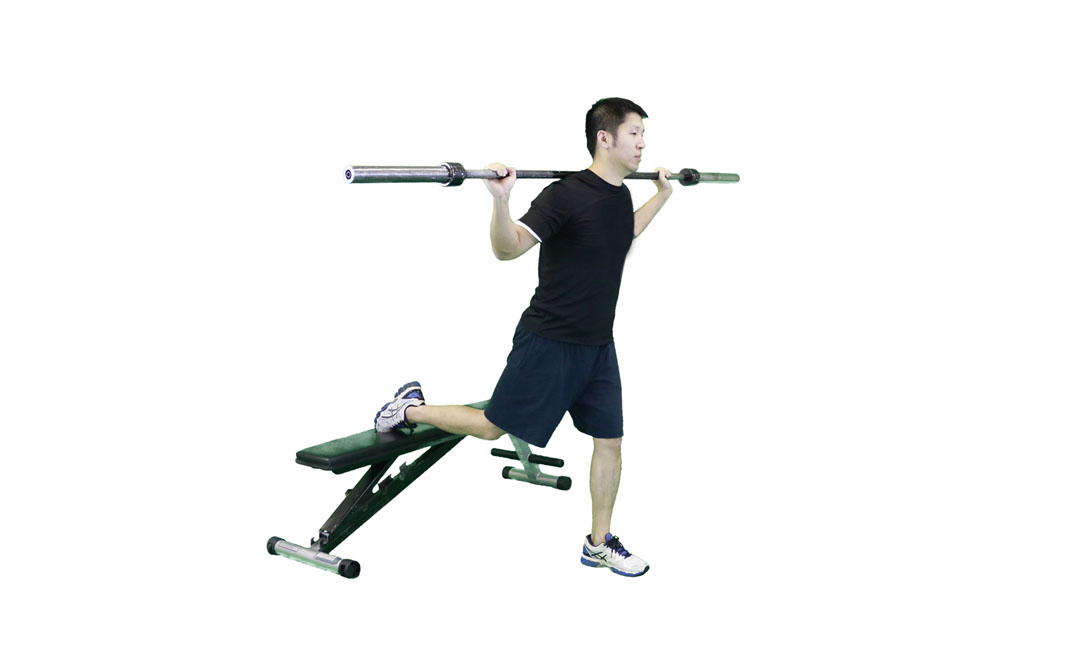
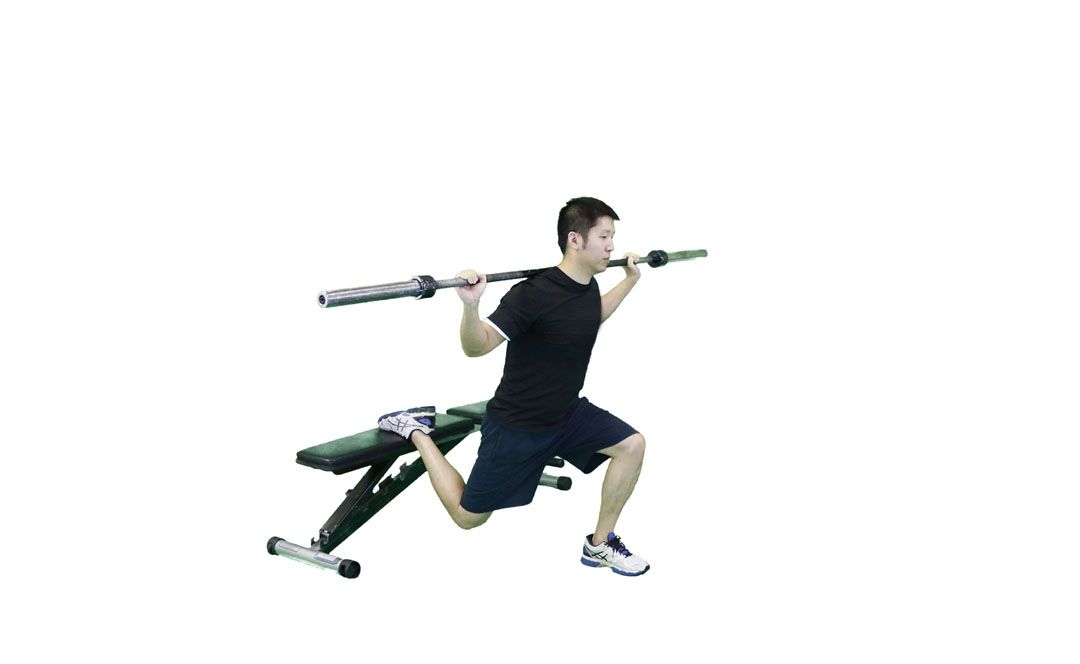
Instructions
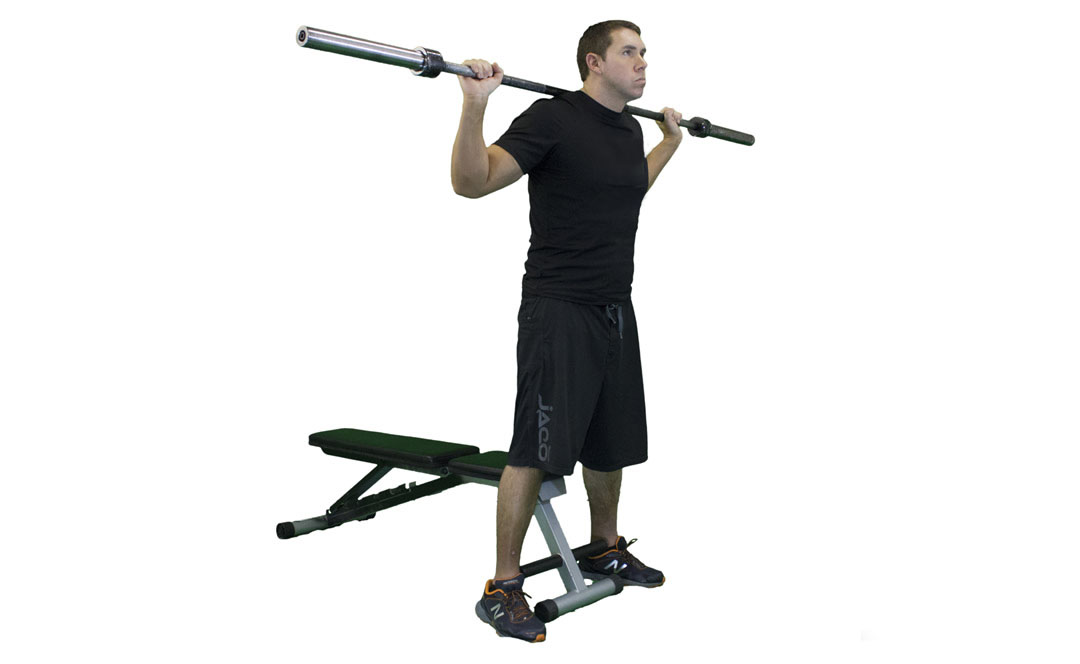
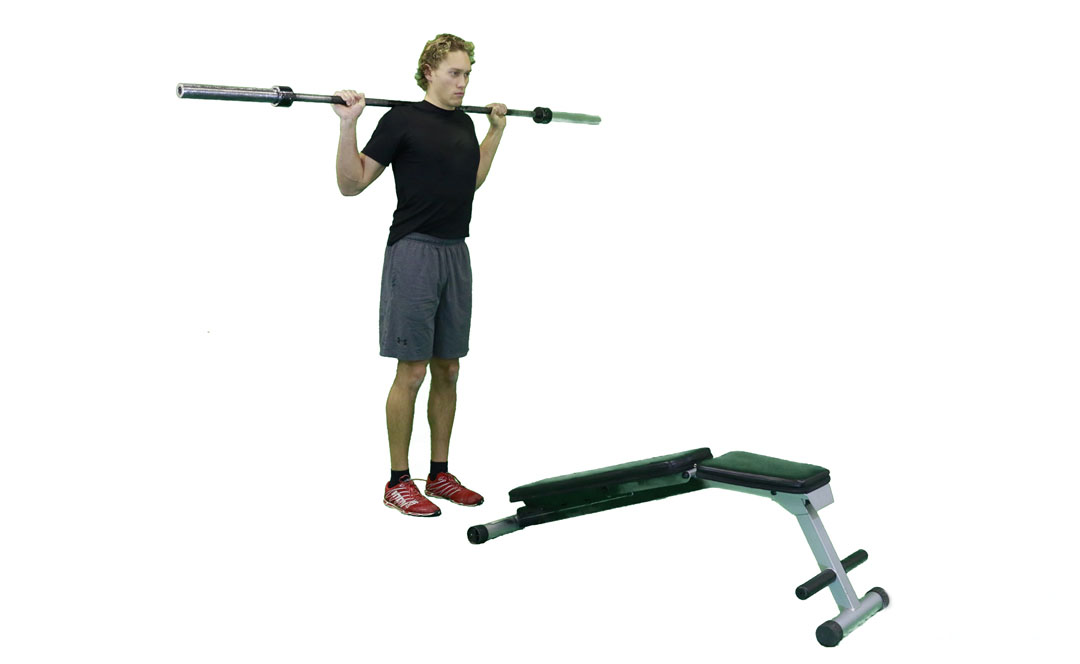
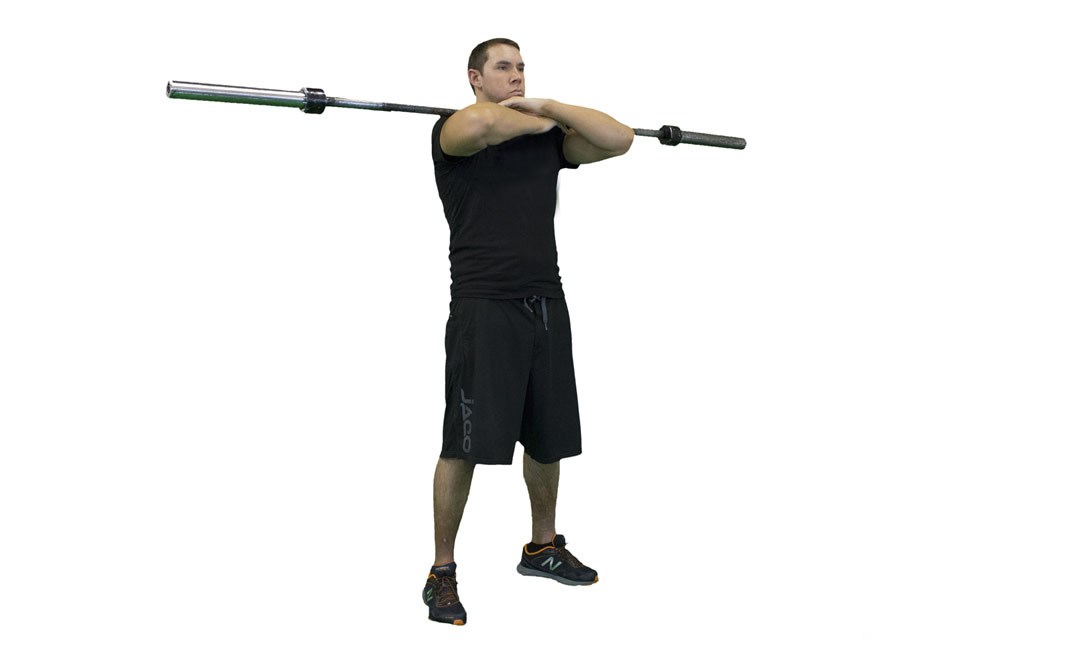
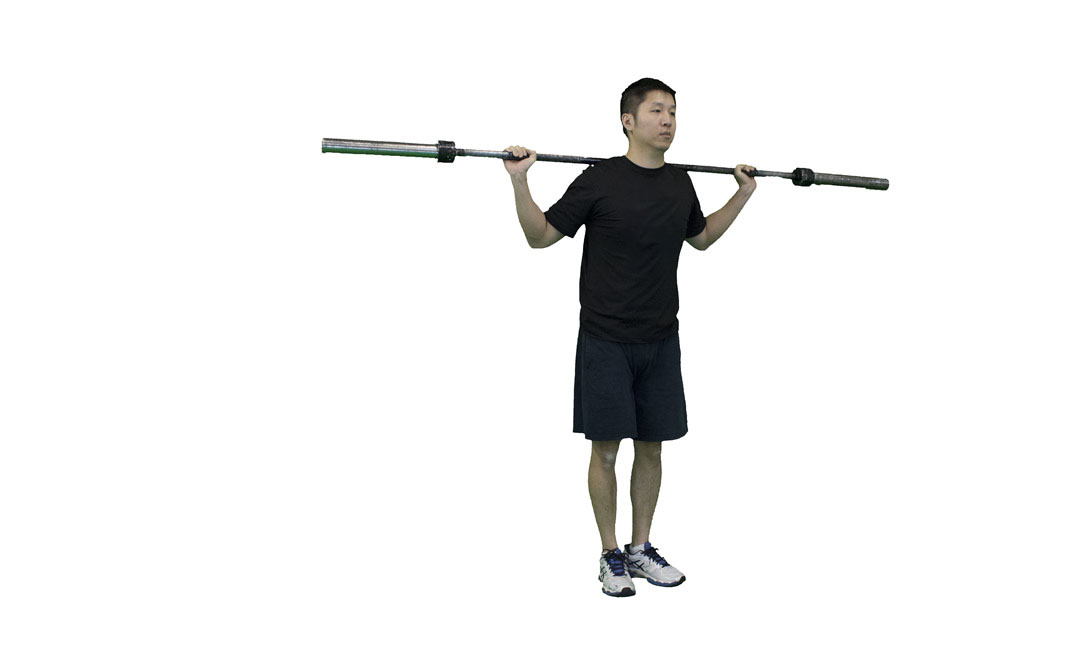
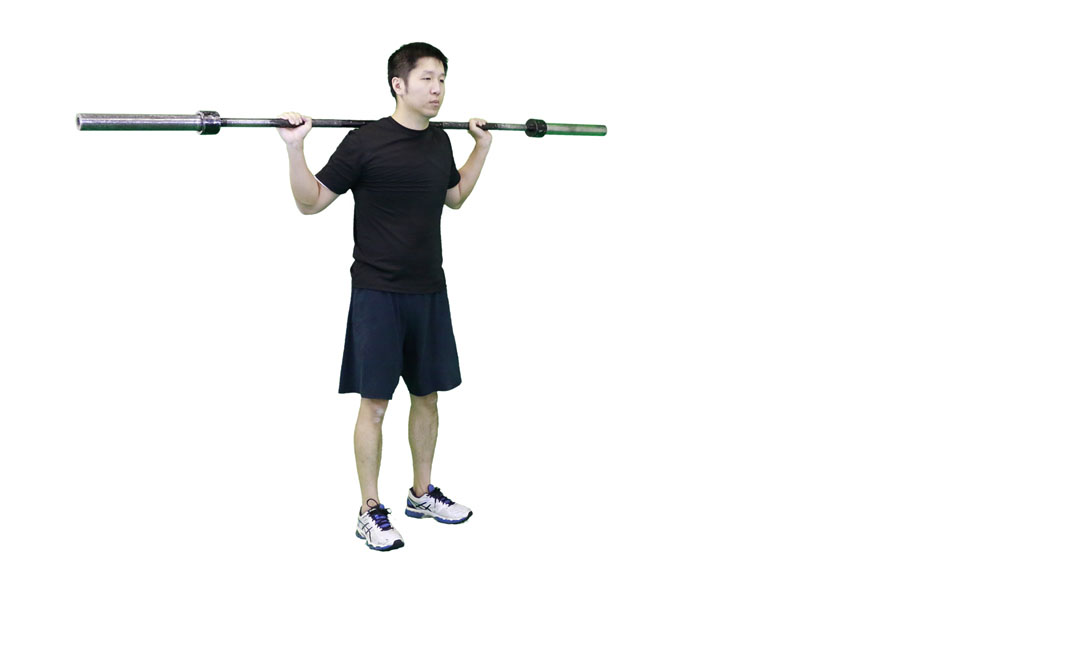
- Set up a stable bench behind you and position a barbell securely across your upper back, not on your neck. Start with a light load or an empty bar while learning.
- Stand about one long step in front of the bench. Place the top of one rear foot on the bench and keep most of your weight through the whole foot of the front leg.
- Brace your trunk, keep your chest tall, and maintain a neutral spine. Point the front knee and toes in the same direction.
- Inhale and lower under control by bending both knees. Let the rear knee travel toward the floor while the front heel stays down.
- Descend only as far as you can while keeping pelvic control, a stable front foot, and a neutral spine. Avoid letting the front knee collapse inward.
- Exhale as you press through the front foot to return to standing. Keep the bar level and finish with control rather than pushing forcefully from the rear foot.
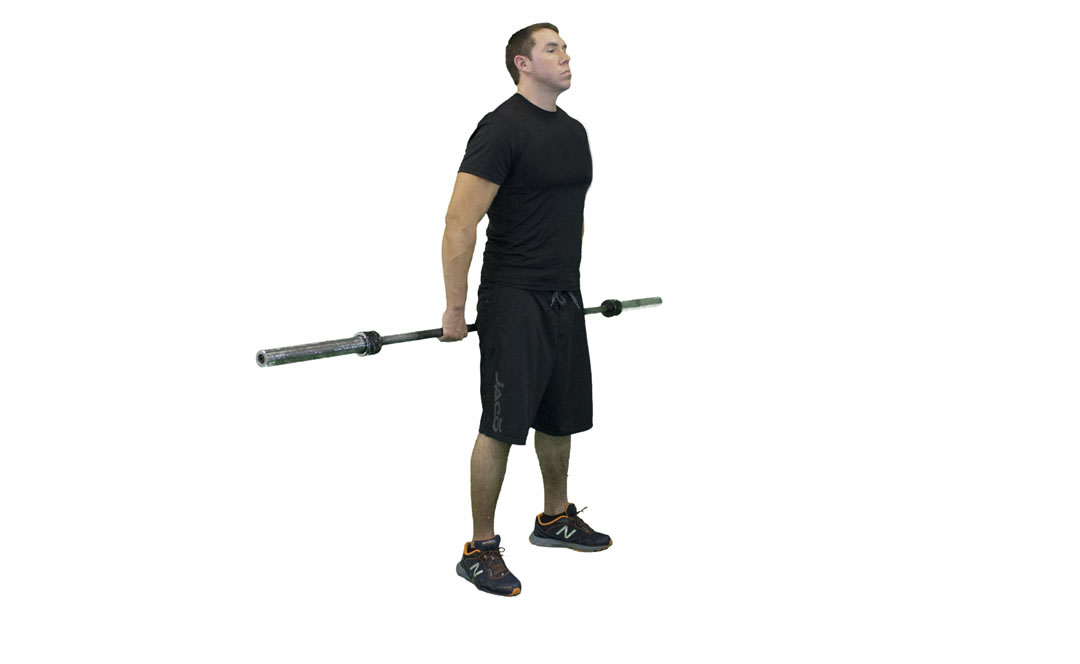
- Complete the planned repetitions on one side, then switch legs. Re-rack the bar safely when the set is complete.