Smart Workout Diary
Cable One-Arm Incline Fly Stability Ball
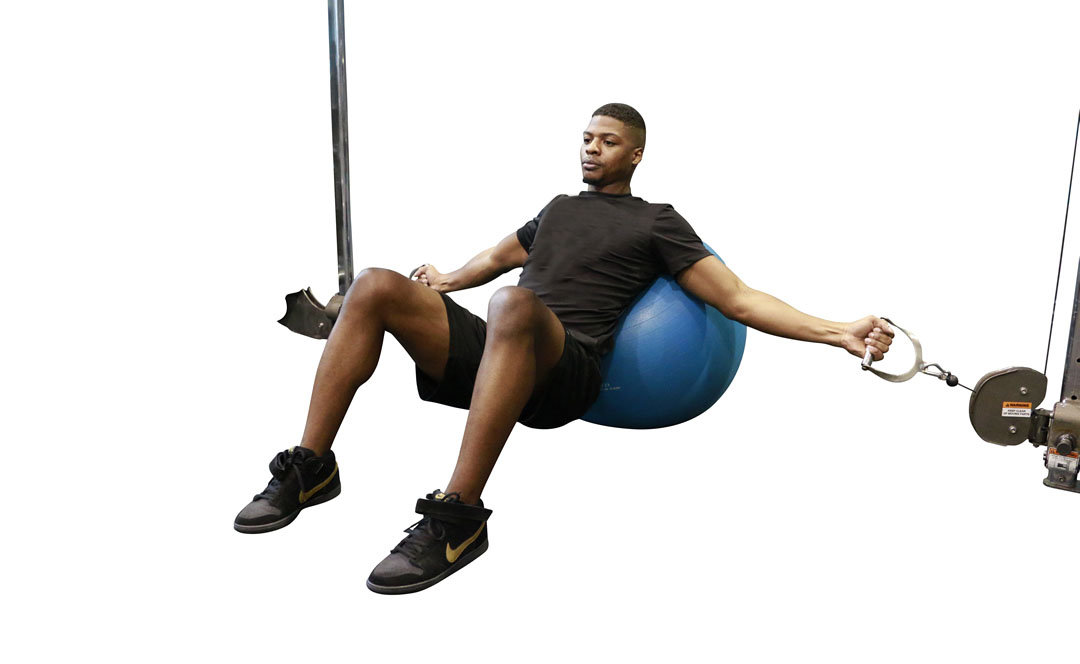
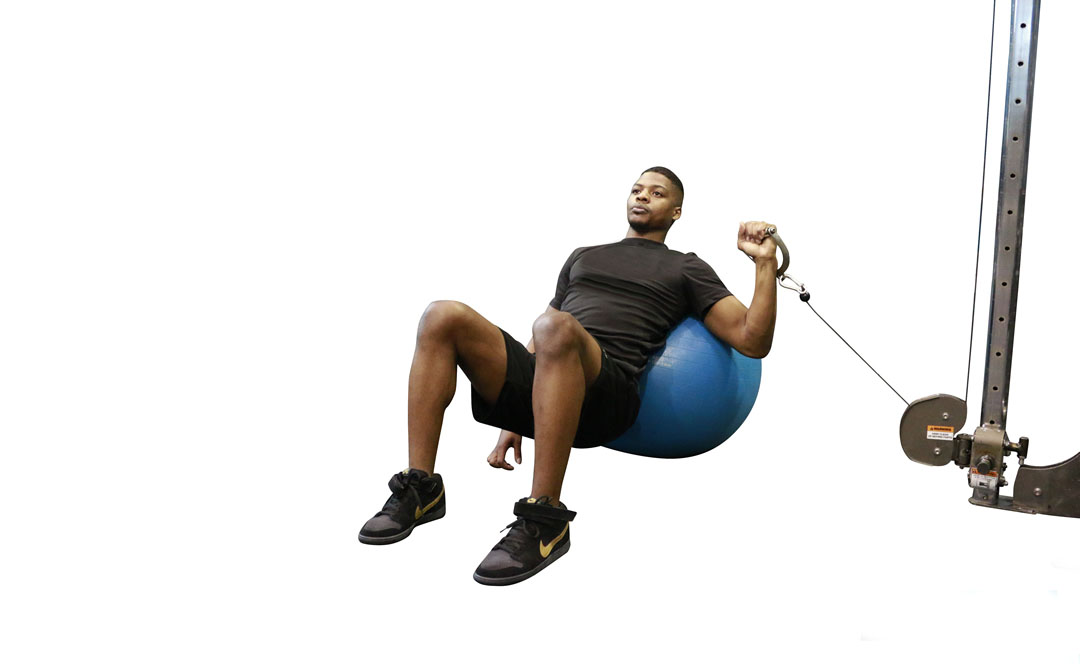
The cable one-arm incline fly on a stability ball is a unilateral chest isolation exercise performed with the upper back supported on an inclined stability ball. It primarily targets the chest, with emphasis on the upper chest, while the shoulder and trunk muscles help maintain a controlled position. It can support chest hypertrophy, muscular control, and left-to-right strength balance.
Demonstration
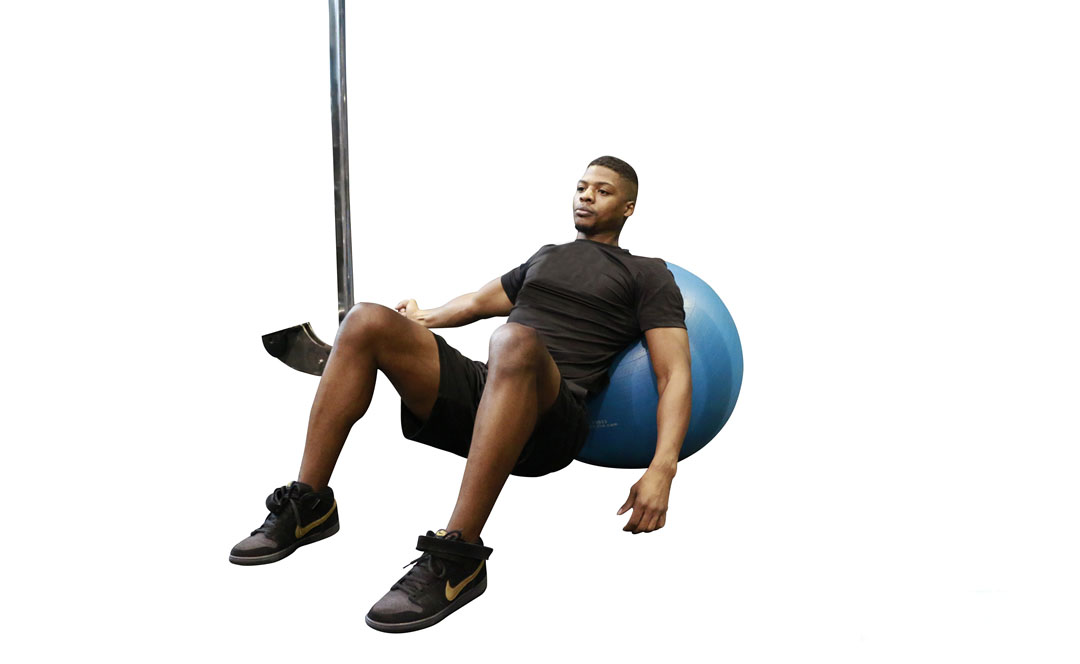
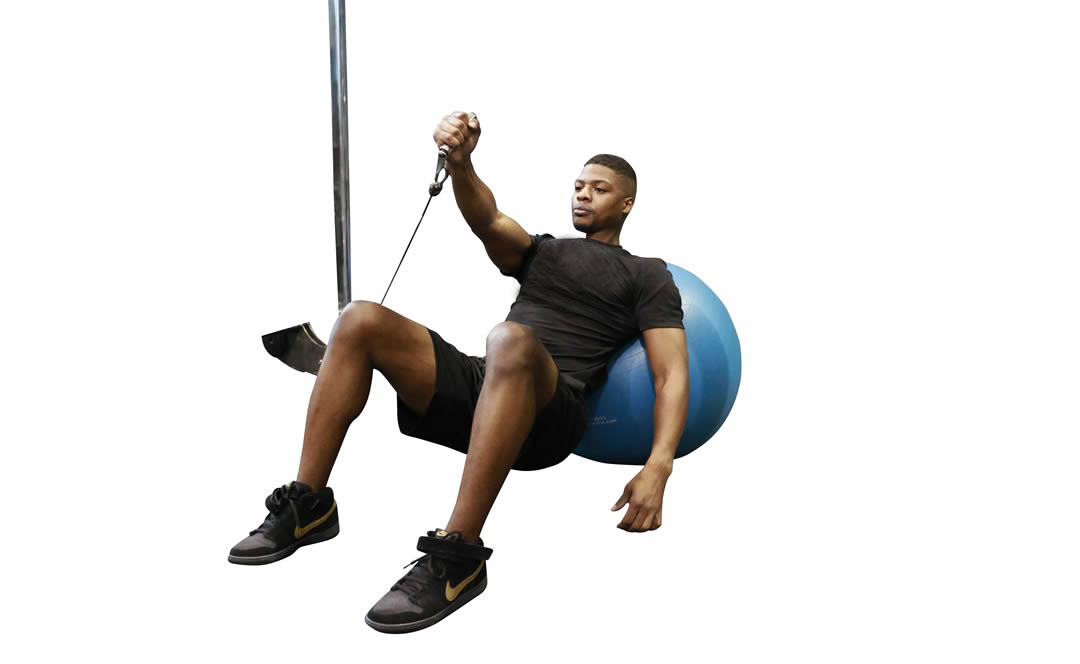
Instructions
- Set a cable pulley slightly below shoulder height and attach a single handle. Place the stability ball in front of the pulley, then position it so your upper back is supported and your torso forms a stable incline.
- Plant both feet firmly on the floor, brace your abdomen, and keep your hips lifted so your head, torso, and hips stay aligned. Hold the handle in the arm farthest from the pulley with a soft bend in the elbow.
- Begin with the working arm open to the side and slightly behind the chest, keeping the shoulder down and the palm facing upward or inward.
- Exhale and sweep the arm in a wide arc toward the midline until the hand reaches in front of the upper chest. Keep the elbow angle nearly unchanged and avoid rotating the torso.
- Inhale as you slowly return to the open position under control, stopping before the shoulder feels excessively stretched.
- Complete all repetitions on one side, then reposition and repeat on the other side. Use a light load that lets you keep the ball and torso stable throughout.