Smart Workout Diary
Barbell Bench Press
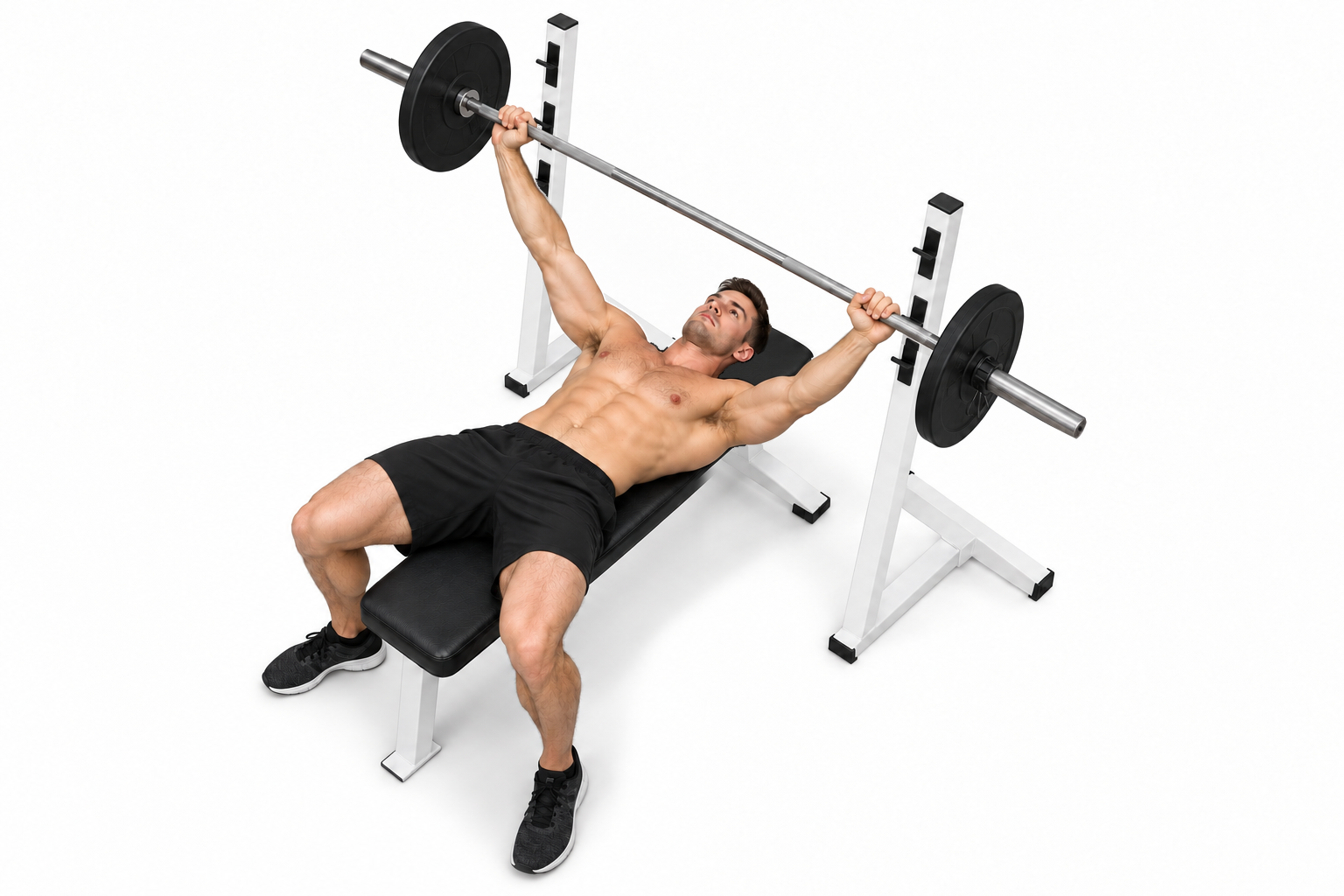
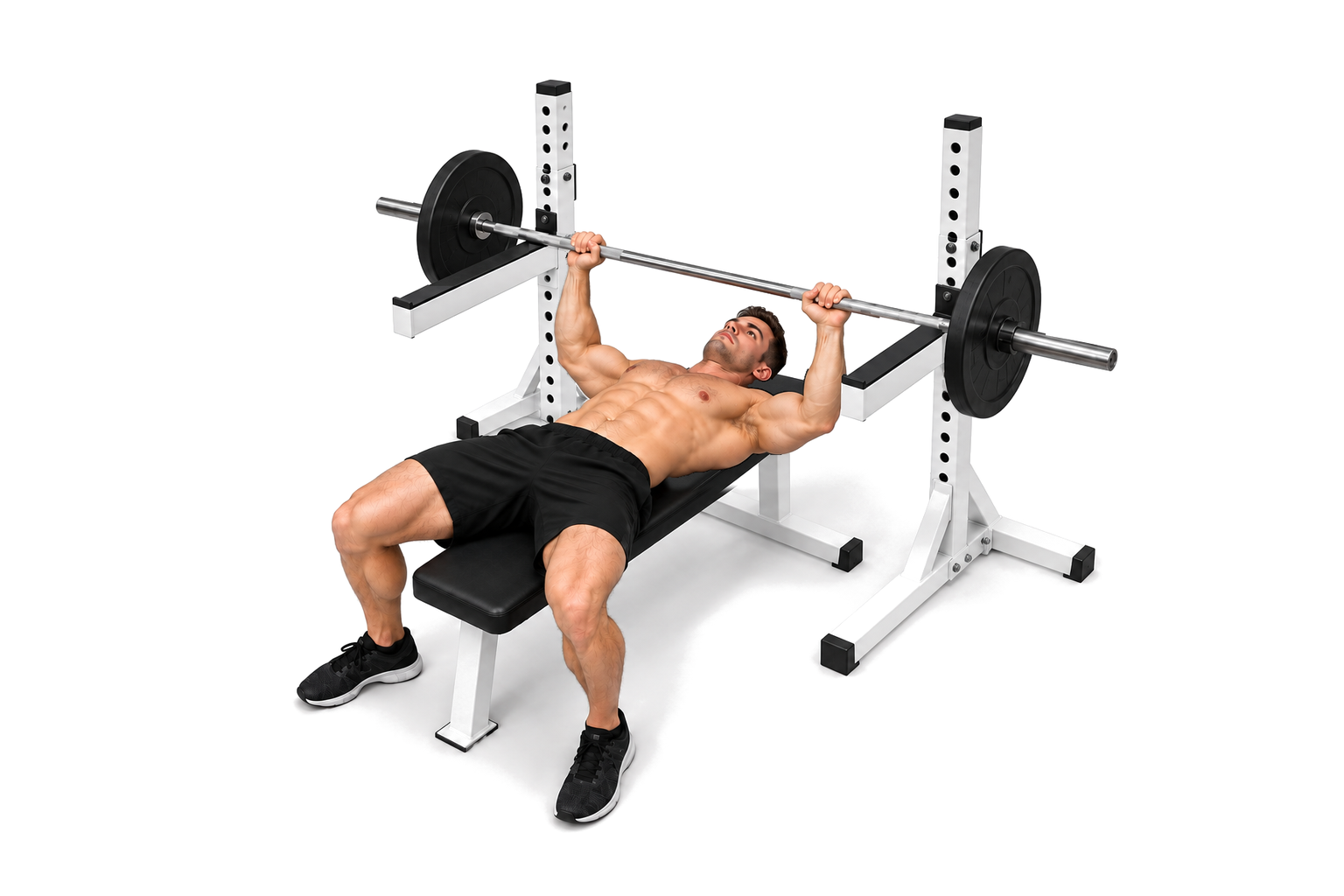
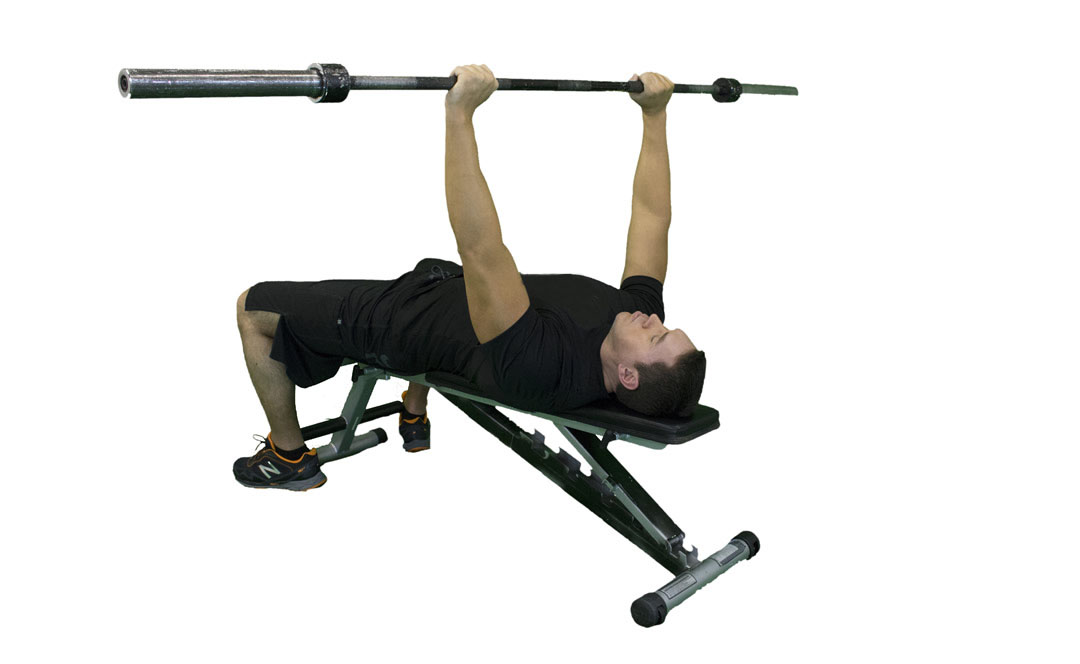
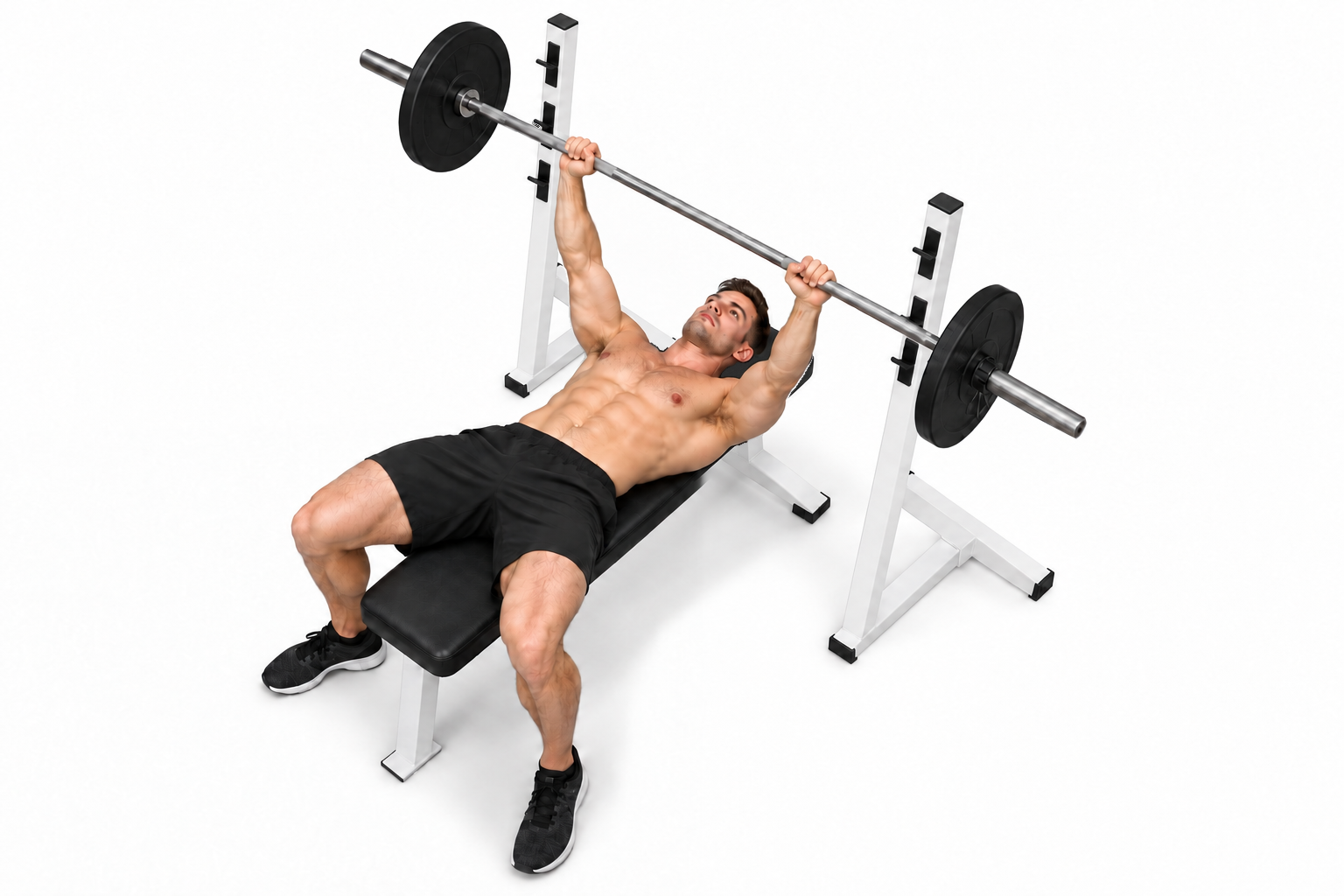
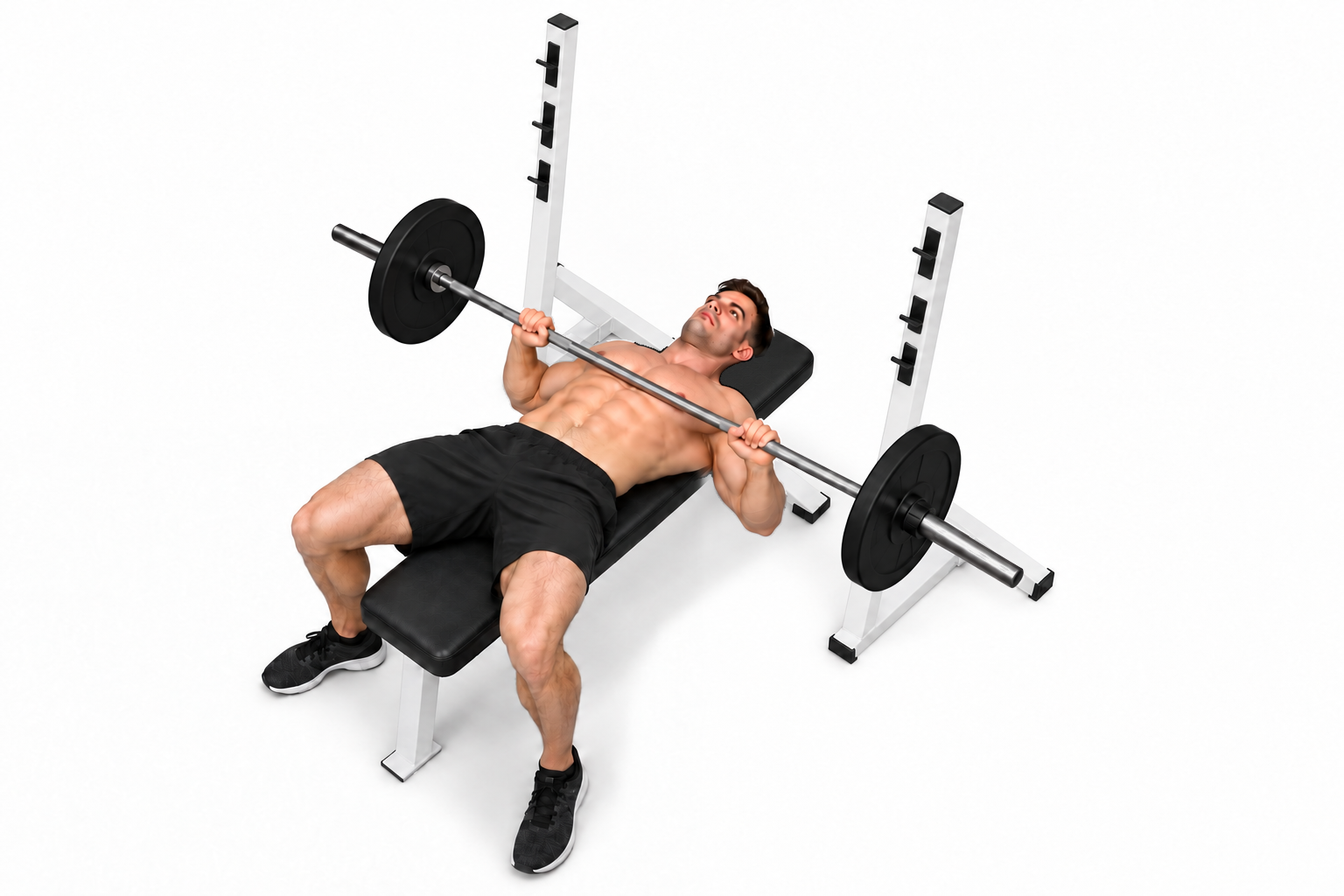
The barbell bench press is a horizontal pressing exercise performed lying on a flat bench. It primarily trains the chest, with substantial assistance from the triceps and front shoulders. It supports upper-body pushing strength and chest muscle development.
Demonstration
Instructions
- Set a barbell in a rack above a flat bench at a height you can safely unrack. Load both sides evenly and use collars; arrange a competent spotter when possible.
- Lie with your eyes roughly below the bar. Place your feet firmly on the floor, keep your head, upper back, and glutes in contact with the bench, and maintain a natural small arch in the lower back.
- Grip the bar slightly wider than shoulder width. Wrap your thumbs around the bar, squeeze the bar firmly, and pull your shoulder blades back and down.
- Unrack the bar with straight arms and position it above the shoulder joints. Take a breath and brace your torso.
- Lower the bar under control to the mid-to-lower chest, keeping the wrists stacked over the forearms and the elbows slightly tucked rather than flared straight out.
- Press the bar upward and slightly back until the elbows are locked out over the shoulders. Exhale through the effort while keeping the shoulders set and feet planted.
- Complete the set with controlled repetitions, then guide the bar fully into the rack hooks before releasing your grip.